Ciamar am bu chòir déiligeadh ri Covid-19?

Le Steaphan

An nì as cudromaiche ri thuigsinn a thaobh Covid-19, ’s e nach eil ann gu bunaiteach ach dà dhòigh  air déiligeadh ris aig ìre nàiseanta.  Dà innleachd a tha ciallach, airidh air beachdachadh orra.  Agus gu bheil an dà innleachd seo gu tur an aghaidh a chéile.  Mar as motha a thathar a’ dèanamh adhartais …


Tadhail air

Powered by WPeMatico

Stòras Beò: Ailig

Le Gordon Wells

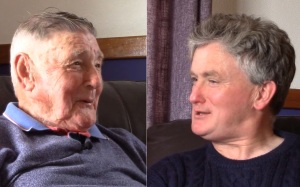
Moving on to Benbecula this month we feature Alec MacPhee from Nunton – Baile nan Cailleach – in our regular spotlight on contributors to Stòras Beò nan Gàidheal. Alec still lives in Nunton, and has three sons (Donald, Angus, and John), eight grandchildren, and one great grandchild. Here he talks to Archie Campbell, also a Benbecula man.

In the first part, Alec recalls his childhood in Nunton, and wartime schooling in Balivanich – Baile a’ Mhanaich – and then Torlum, including pranks in the playground, classroom, or garden, as well as crofting chores at home, and later with the peats. Leaving school at 14, he started his first paid job in the building trade at 16. He also recalls wartime memories of many different nationalities associated with the airport and POWs, including Australians, Poles, Germans and Italians. He talks too of the end-of-war celebrations and memories of the “Whisky Galore” SS Politician. He then spent some time in Glasgow.

A wordlinked transcript is available here: http://multidict.net/cs/8243

In the second part, Alec relates how he came back to the croft and then got work with a services company which took him and several friends out to St Kilda. He later got work with the Water Board, with whom he stayed until retirement. He also talks about recreational activities, including badminton and football, as well as dances and New Year customs and associated drinking practices. He describes how he met his wife, Margaret, and the details of their wedding, and tells a story of a commando who turned up in the Steadings. Discussion of army-community relations leads to reflection on the changes he’s seen in island life.

A wordlinked transcript is available here: http://multidict.net/cs/8244


Tadhail air Island Voices – Guthan nan Eilean

Powered by WPeMatico

“Living off the edge”

Le Gordon Wells

Conchúr Ó Giollagáin gave this talk online, and the recording is now available on YouTube. His title was “Living off the edge: The crisis in late modern ethnolinguistic diversity from the Gaelic perspective”, and the talk drew substantially from the findings of the recent publication “The Gaelic Crisis in the Vernacular Community”. This is a substantial report on the findings of Soillse’s very comprehensive Islands Gaelic Research Project. It’s a challenging read in many ways, with particular relevance for anyone interested in Gaelic in the Hebrides. From that point of view it’s good to be able to hear Conchúr talk about the research and answer questions about the implications.

He had a lot of ground to cover in 40 minutes. If you missed it live here’s your chance to hear what he had to say – or indeed to listen again in case you feel the need.


Tadhail air Island Voices – Guthan nan Eilean

Powered by WPeMatico

A’ cur còraichean na cloinne dhan lagh – co-chomhairle #gàidhlig

Le Oifigear Gàidhlig

Tha Comataidh Co-ionannachd is Chòraichean Daonna na Pàrlamaid a’ sireadh bheachdan bho òigridh mu bhith a’ cur còraichean na cloinne dhan lagh. Tha Pàrlamaid na h-Alba air goireasan a chruthachadh a bhios feumail do sgoiltean a tha ag iarraidh pàirt a ghabhail sa cho-chomhairle no a tha airson teagasg mu chòraichean chloinne san fharsaingeachd. Co-theacsa … Leugh an corr de A’ cur còraichean na cloinne dhan lagh – co-chomhairle #gàidhlig

Tadhail air Blog Pàrlamaid na h-Alba

Powered by WPeMatico

Co-chomhairle chudromach mu chòmhdail phoblach #gàidhlig

Le alasdairmaccaluim

Tha Riaghaltas na h-Alba a’ sireadh bheachdan air còmhdhail phoblach an-asgaidh do dh’òigridh fo aois 19 aig an àm seo.

Tha a’ cho-chomhaile fosgailte gu 7 Dubhlachd.

Seann bhusaichean taobh a-muigh Pàirce na Banrigh, Glaschu

Chithear am pàipear co-chomhairle an seo agus faodar beachdan a chur a-steach air a’ cheisteachan air-loidhne.

Tha mi air mo chuid bheachdan a chur a-steach mar-thà – anns a’ Ghàidhlig mar a bhiodhte an dùil. Thuirt mi gur e fìor dheagh rud a bhiodh ann a thaobh co-ionannachd shòisealta agus a thaobh na h-àrainneachd.

Thuirt mi cuideachd, ge-tà, gum bu chòir tramaichean, an Subway agus seirbheisean rèile ionadail a bhith an-asgaidh do dhaoine fo aois 19 cuideachd gus cothrom na fèinne a thoirt do gach modh còmhdhail. Tha seo fìor gu sònraichte ann an àiteachan far a bheil ceanglaichean rèile nas fheàrr na na seirbheisean bus.

Ma tha thu airson am pàipear co-chomhairle a leughadh sa Ghàidhlig, tha Còmhdhail Alba fìor mhath a thaobh a bhith ag eadar-theangachadh sgrìobhainnean dhan Ghàidhlig.

Chuir iad Gàidhlig air pàipear ro-innleachd nan rathaidean-iarainn bho chionn goirid nuair a rinn mi iarrtas. Ma tha sibh airson am pàipear seo fhaicinn sa Ghàidhlig, cuir fios thuca air info@transport.gov.uk.

Agus ma tha sibh a’ gabhail pàirt sa cho-chomhairle, ge b’ e dè am beachd a chuireas sibh a-steach, cuir a-steach do chuid bheachdan sa Ghàidhlig!

Ma tha thu a’ fuireach ann an Glaschu, tha a’ chomhairle a’ dèanamh co-chomhairle mu chòmhdhail cuideachd. Bidh e a’ tighinn gu crich air 30/10 ach ma tha thu luath, tha cothrom ann do bheachdan a chur a-steach fhathast!

Chuir mi mo bheachdan fhèin a-steach: mhol mi siostam meatro, Cross-rèile Ghlaschu agus seirbheis bus ann an làmhan a’ phobaill.

Alasdair


Tadhail air Trèanaichean, tramaichean is tràilidhean

Powered by WPeMatico

Tinte na Farraige Duibhe

Le lasairdhubh

Tha mi air mo dhòigh innse gum bi eadar-theangachadh de ACDD gu Gàidhlig na h-Èireann a’ tighinn a-mach an clò a dh’aithghearr. Ga tionndadh gu Gàidhlig Èireannach le Eoin P. Ó Murchú agus ga foillseachadh le Leabhar Breac, tha sgeulachd uabhasach inntinneach air cùl an eadar-theagachaidh, agus sgrìobh mi beagan uime an seo. Agus ma tha a’ Ghàidhlig sin agaibh, thèid a reic greis le lasachadh air a’ phrìs bho €15.00 gu €12.00. Nach e sin an salann saor!


Tadhail air Air Cuan Dubh Drilseach

Powered by WPeMatico

Gaelic virality: a snapshot

Le Gordon Wells

What’s a Gaelic community?

A lot of social media screentime has been spent on this question. Frequently, the discussion centres on the comparative treatment of those who have a dispersed or “network” connection with Gaelic – whether in an urban mainland “diaspora” setting, or indeed a largely internet-mediated “virtual” sense – and those who live in geographically defined Hebridean communities where the density of Gaelic speakers by head of resident population is far higher.

Through its very name the Island Voices/Guthan nan Eilean project affirms the actual centrality of its so-called “peripheral” location to its function and focus. The islands are our geographical home. Even so, our work is primarily presented online, so our reach is not just Hebridean or even Scotland-wide, but truly international, and our interest is in serving all those who visit our posts and pages. Further, our linguistic focus is not just on Gaelic, or even Gaelic and English together, but increasingly multilingual and diverse.

For all these reasons we are driven to look beyond the zero-sum thinking often associated with a monolingual mindset. If paying Paul does not entail robbing Peter, then by the same token, taking care of Paul’s needs does not necessitate neglecting Peter’s. If the choice is recognised as false, then it should be possible to focus attention on either Peter or Paul as occasion demands without laying oneself open to a charge of “divisiveness”. Quite the contrary, in a situation where Peter’s own wellbeing is ultimately dependent on that of Paul, ignoring Paul’s evident distress will do Peter no good at all.

That’s quite a long pre-emptive preamble to the point of this post, which is to display some striking figures on visits to this site from the first three days of October. Regular visitors will have noted that recently we have been featuring different contributors to the UHI-led Stòras Beò nan Gàidheal project on the first day of each month. The Stòras Beò materials are a set of long-form video-recorded discussions between fluent speakers of Gaelic talking about their lives. As natural conversations they are intrinsically interesting. And beyond that, as examples of authentic speech they have many add-on applications for speakers, learners and researchers of Gaelic, including support for the current Gaelic Speech Recognition project being led by Edinburgh University, and planned contribution to the Digital Archive of Scottish Gaelic created by Glasgow University.

Posting first here on WordPress, the central website around which our various social media channels orbit, it’s normal practice for Island Voices to place links on our Twitter account and Facebook page on following days as a way of encouraging new and returning visitors to visit this site. This month it was the turn of Dòmhnall Caol (Donald MacDonald) from Baleshare to be featured.

The following figure shows the WordPress analytics for October 1st-3rd, with some annotations indicative of differential responses from what might be loosely defined as “networked” and “islands-based” Facebook interest groups.

Visits to Guthan nan Eilean WordPress site, 1st-3rd October

Here’s the timeline in more detail:

01/10/20

The WordPress post “Stòras Beò: Dòmhnall” was shared from the FB page to three prominent Gaelic interest groups: Gàidhlig na h-Alba ☯ Scottish Gaelic, Gàidhlig na h-Alba ~ Scottish Gaelic, and Scottish Gaelic Speakers Unite!. On that day these groups had a combined total membership of 12232 (with a probability of significant crossmembership).

By the end of the day there had been 98 recorded visits to the WordPress site.

This, as would be expected on the first day of a new post, is a significantly higher figure (around 2.5 times) than the daily average of about 40 WordPress visits up until that point in 2020.

02/10/20

The same WordPress post “Stòras Beò: Dòmhnall” was shared 24 hours later from the FB page to two Uist-focused pages/groups: North Uist Appreciation Society – NUAS (page), and South Uist/Uibhist a Deas Appreciation Society – SUAS (group). The total on that day for page-followers and group-members was 12020 (with a probability of significant crossmembership).

By the end of the day there had been 822 visits to WordPress, more than 20 times the daily average for the year.

03/10/20

Following spontaneous sharing of the previous month’s post “Stòras Beò: Aonghas” as a follow-up by NUAS, it was then also posted in the SUAS group.

By the end of the day there had been 667 visits to WordPress, more than 16 times the daily average.

————–

Of course, a strict warning should be issued against any bald assertion, based on just these figures, that Facebook followers who have an island connection are multiple times more likely to take an active interest in a post on Gaelic than those whose interest in the language does not have this geographic link. This is just a snapshot in time with no control for all sorts of variables too numerous to list in a blogpost. Nevertheless, it surely points to some kind of effect, which will probably be explicable – at least in part – by reference to the significant importance of a geographical community connection to Gaelic, as it is used in the islands, in stimulating online engagement with it.

If that basic point is conceded, then any indication that the islands’ connection with Gaelic is in serious trouble, for which the recent “Gaelic Crisis” report provides ample quantitative evidence, surely deserves close attention, including from those speakers and other well-wishers whose connection is remote or “virtual”. Certainly, there is little sign from this small snapshot that any hope of fully compensatory numbers of new speakers emerging from geographically displaced and dispersed networks is likely to be easily fulfilled.

From an Island Voices point of view, we can at least take comfort from the indication that our positive “insular focus” is appreciated by the local community, while maintaining our commitment to inclusively showcasing these islands’ unique linguistic character and versatility on a worldwide stage. It would surely be zero-sum thinking of a kind Gaelic advocates routinely reject, to view the recent urgent “call to arms” to inject new energy into Gaelic revival efforts at island community level as some kind of competitive threat to more dispersed interests. The one should feed the other.

The MSP for the Western Isles has announced a series of online meetings for various island communities to discuss ways forward for Gaelic in coming days. The link is here.


Tadhail air Island Voices – Guthan nan Eilean

Powered by WPeMatico

Seanadh Gnàth-shìde na h-Alba – iomairt bheag

Le alasdairmaccaluim

Chaidh Seanadh Gnàth-shìde na h-Alba a chur air dòigh tro Achd Atharrachadh na Gnàth-thìde (Targaidean airson Sgaoilidhean a Lùghdachadh) (Alba) 2019. ‘S e a th’ ann ach seanadh de shaoranaich a bhios a’ cnuasachadh air gnothaichean mun àrainneachd agus a’ toirt mholaidhean do Phàrlamaid na h-Alba.

Scotland's Climate Assembly Logo

Tha co-chomhairle a’ dol air adhart an-dràsta, a’ sìreadh bheachdan a thèid a thoirt dhan t-Seanadh.

Tha a’ cho-chomhairle a’ tighinn gu crìch 26/10/20.

Tha còmhdhail na pàirt chudromach de bhith a’ lùghdachadh sgaoilidhean càrboin. Air an adhbhar seo, tha mi air beachd a chur air ais dhan cho-chomhairle a thaobh rathaidean-iarainn.

Seo e:

Prògram de dh’fhosglaidhean/ath-fhosglaidhean reile

Clas 170, Luacharas – thathar an dùil gum bi seirbheisean a’ dol gu Cill Rìmhinn bho seo latha de na làithean

Tha Riaghaltas na h-Alba a’ dèanamh tòrr an-dràsta gus rathaidean-iarainn a dhì-charbonachadh ach tha an t-àm ann a bhith a’ cur ri sin le prògram leantainneach (’rolling programme’) de rathaidean-iarainn ùra is ath-fhosgailte. 

Bu chòir na loidhnichean a leanas a bhith air a’ phrògram, mar eisimpleir:

Loidhne Chill Rìmhinn

South Sub Dhùn Èideann

Slighe a’ Waverley bho Bhruach Thuaidh- Carlisle

– Obar Dheathain- Eilean (Ellon) – Ceann Phàdraig / Baile nam Frisealach

– Crois-rèile Ghlaschu 

– Almhagh-Dùn Phàrlain

– An Eaglais Bhreac – Inbhir Ghrainnse

– Ceangal rèile gu Port Adhair Ghlaschu

– Siostam thramaichean do Ghlaschu

Why the contribution is important

– Tha prògram leantainneach de rathaidean-iarainn ùra/ath-fhosgailte cudromach gus còmhdhail phoblach a bhrosnachadh agus gus sgaoilidhean carboin a lùghdachadh. 

– Tha e cudromach gum bi lìonra rèile ann a tha a’ ceangail na dùthcha ri chèile agus a’ brosnachadh gluasad bho chàraichean gu còmhdhail phoblach.

– Tha rannsachadh air sealltainn gu bheil rathaidean-iarainn nas èifeachdaiche gus gluasad a bhrosnachadh bho chàraichean gu còmhdhail phoblach na busaichean.

– Tha àiteachan ann an Alba far nach eil deagh cheanglaichean ann le còmhdhail phoblach – m.e Ear-thuath na h-Alba agus Glaschu/taobh an iar na h-Alba – Fìobh, na Crìochan gu Carlisle agus cha ghabh na beàrnan seo a lìonadh ach le rèile. 

Aig an àm seo, tha iomairtean gus rathaidean-iarainn ath-fhosgladh a’ toirt bhliadhnaichean mòra is obair ro-mhòr. Tha aig coimhearsnachdan, buidhnean iomairt is Comhairlean ri iomairtean fada duilich a dhèanamh mus bi adhartas sam bith ann. An àite seo, bu chòir prògram a bhith ann aig an ìre nàiseanta far am bi an Riaghaltas a’ gabhail an uallaich os làimh airson a bhith a’ brosnachadh is a’ planadh rathaidean-iarainn ùra agus bu chòir prògram leantainneach (’rolling programme’) a bhith ann.

Tha an riaghaltas ag amas air mu 125 mìle a de rathaidean-iarainn a dhealanachadh gach bliadhna. Bu chòir targaid a bhith ann airson mìltean de rathaidean-iarainn a thèid fhosgladh gach bliadhna, can 10 mìle gach bliadhna.

Stèisesan Mhaolros – cuine a thilleas na trèanaichean?

Ma tha thu ag aontachadh ris a’ mholadh, bhiodh e glan nam b’ urrainn dhut a dhol dhan cheangail seo, clàradh air an làraich agus bhòtadh air seo no beachd no dhà fhàgail.

Tha tòrr mholaidhean eile ann air a h-uile cuspair co-cheangailte ris a’ ghnàth-shìde – na bi leisg do chuid bheachdan a chur a-steach – sa Ghàidhlig!

Alasdair


Tadhail air Trèanaichean, tramaichean is tràilidhean

Powered by WPeMatico

Sgrìobhadh Ficsein mar Ionnsachadh Cànain

Le lasairdhubh

Air ath-phostadh bhon Foundation for Endangered Languages:

A novel way to learn a minority language: Writing a novel in the language

Tim Armstrong

Tim Armstrong is a Senior Lecturer in Gaelic and Communication at Sabhal Mòr Ostaig, the Gaelic college on the Isle of Skye, and his novel, Air Cuan Dubh Drillseach, won the 2013 Saltire Society award for best first novel.

At this year’s conference, FEL24, Tim delivered a plenary on minority language learning in tertiary education as well as gave a reading of Gaelic novels in the evening.  This blog post draws on both talks and the lively discussions that followed afterwards.

I write science fiction in Scottish Gaelic, and when asked why, I have to admit that my reasons are fairly prosaic. While do I hope that my novels might eventually contribute in some way to the continuing vitality of the language; truthfully, that’s not why I do it.

The fact is that I just really enjoy writing—but also, writing long fiction in Gaelic is a great way for me to continue to work on my proficiency in the language.

Leugh barrachd…


Tadhail air Air Cuan Dubh Drilseach

Powered by WPeMatico

Gaelic Hebrides point the multilingual way

Le Gordon Wells

The University of the Highlands and Islands takes inspiration from Island Voices.

Perhaps a surprise to some, but not to us!

Here’s how it all comes back to Benbecula…

The tweeted press release touches on a couple of international projects that are being taken forward by UHI’s Language Sciences Institute. It doesn’t have the space to describe in detail how each builds on experience first gained in the Island Voices/Guthan nan Eilean project, and the closely linked development of Clilstore at Sabhal Mòr Ostaig. Both of these have grown from originally European Union-funded initiatives.

Island Voices followers who have time and inclination to read a bit more may find the additional information below of interest.

Taisce bheo na nGael/Stòras Beò nan Gàidheal” is a joint Irish/Scottish Gaelic ethnographic retrieval project in which community-based expert speakers are recorded in their own homes. The first stage of the Scottish side of the project was completed shortly before lockdown began. There are now 15 hours of video material with Clilstore transcriptions on the Institute’s website, with access open to all. Project partners are now testing out alternative ways of making recordings online, in case continuing lockdown restrictions mean the Irish recording stage needs to be tackled in a different way.

The same issue has also arisen with the Institute’s “Mediating Multilingualism” project in India, in partnership with Amity University Haryana and the Indian network of Centres for Endangered Languages. With COVID-19 continuing to cause severe disruption to university-based activities there (including fieldwork), the project team has already been trialling the production of home-based recordings for publication on the same, highly flexible, online Clilstore platform. Six Indian languages have been recently added to its linguistic range. Some of these are featured in the short Gaelic film (subtitled in English) “Dà Dhùthaich Iomadh Cànan/Two Lands Many Languages” produced by the UHI team after visiting Shillong in North-East India at the end of 2019 (the International Year of Indigenous Languages). This is also available to view online on the project’s webpage.


Tadhail air Island Voices – Guthan nan Eilean

Powered by WPeMatico