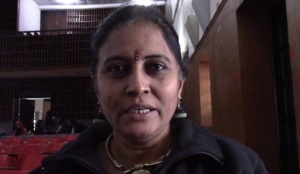
Stòras Beò: Hughena

Le Gordon Wells

Hughena MacDonald is the next interviewee in this series of conversations with Archie Campbell.

In Part 1, Hughena talks about her family background and her happy memories of growing up and going to various schools in Uist and Benbecula, including her experience of coming across computers for the first time when Sgoil Lìonacleit opened.

This was followed by a spell in Stornoway where she studied at the college and did part-time work, including with Radio nan Gàidheal. On returning to Uist she worked in various places, and raised a family. She describes how she enjoys working with people, and how she likes to relax afterwards.

You can read the wordlinked transcript here on Clilstore: http://multidict.net/cs/7915

In Part 2, discussion of the importance of Hughena’s faith to her leads onto broader reminiscence over customs and traditions in the days of her childhood, when casual visits to and from neighbours would be more frequent, often related to crofting matters. Hughena describes early memories of collecting and eating shellfish from the shore, and of baking skills less often put to use these days now that so much is so easily available in the shops. The conversation finishes with some discussion of the strength of Gaelic use in her family, how she’s passed it on successfully to her children, and the value of now encouraging older community members to share their spoken skills, while acknowledging the challenges involved in recording them.

The Clilstore transcript is available here: http://multidict.net/cs/7916


Tadhail air Island Voices – Guthan nan Eilean

Powered by WPeMatico

Scottish Gaelic in Scottish Courts

Le basedrones

I’m going to do that thing where I write in English about Gaelic. Three reasons might be offered for this transgression, such as it is, in no particular order.

  1. Gaelic coverage of the issue I am discussing is available elsewhere, notably on the BBC website here and here, on the radio programme Aithris na Maidne (for another 28 days), and (until 19.15 tonight!) on the BBC iPlayer for the BBC Alba programme An Là;
  2. For maximum reach, as there is no denying more people in the world understand English than Gaelic;
  3. For laziness, as my own written (and legal) English is much better than my Gaelic.

Moving to the substance of the blog post, as adverted to in the title and as those who clicked the BBC Naidheachdan link will have gleaned, this post is about usage of the Gaelic language in Scottish courts. The post follows on from a recent criminal court case (on Thursday 31 October), where someone tried to use Gaelic orally at Edinburgh Sheriff Court and was bounced in his attempt to do so.

(For clarity, this case was not directly about Gaelic, but rather it came into play simply as a result of someone involved in the case wishing to speak in the language. As regards the case itself, I will let the person involved speak to that, by linking to his tweet.)

Scots Gaelic and its place in the Scottish legal system is something I have blogged about before (for example, see this post from 2015). This engaged a slightly new issue though: can a Scottish court force a participant to use English rather than Gaelic?

In short: yes, it can.

For this particular case, an interpreter was, it seems, lined up at one stage but for whatever reason was not available on the day. Given there are not many Gaelic speakers in contemporary Scotland who are not also fluent in English (a demographic that is basically only pre-school age children and elderly people who have reverted to their first language), a court can normally be clear that a Gaelic speaker will understand English, and in this case the sheriff was able to press on notwithstanding the lack of an interpreter (something that would surely have not been possible where a Polish or Lithuanian interpreter had not shown up).

This was described by Wilson MacLeod on Twitter as “Tàmailteach“, which might be translated as “a disaster”. I’ll be a bit more guarded here and note that this is all somewhat suboptimal.

Sure, we know that the person involved could have participated in English, but when language rights are involved that is at best an ancillary point. I also of course appreciate that court delays in a busy court system should be avoided wherever possible. The thing is, Gaelic is not exactly in rare health at the moment. Official opportunities to use the language should be provided. It’s all very nice to allow Gaelic to be used in sheriff court proceedings every once in a while, as happened in 2005 before Sheriff Sutherland in Stornoway, but I can’t help but feeling this episode has highlighted that language rights in Scotland are somewhat wanting when compared to somewhere else in the UK, namely Wales. It took Scotland a while to get legislation about Gaelic on the statute books (see for example this Hansard exchange about a proposed bill in the 1980s), but what we have now – the Gaelic Language (Scotland) Act 2005 – does not enshrine the right to use Gaelic in legal proceedings. That can be contrasted with the right to use Welsh in legal proceedings in Wales (in terms of the Welsh Language Act 1993, and before that the Welsh Language Act 1967).

As Ruairidh Maciver (I declare an interest – he’s a first cousin) noted in his BBC Report, attempts were made to use Gaelic in court proceedings in the 1980s, in connection with the Ceartas campaign. (Anyone wishing to read up on this with access to a law library can find a discussion in this legal comment piece: A C Evans “Use of Gaelic in Court Proceedings” 1982 SLT (News) 286.) It was bounced then as well. Have we moved forward? Are we simply paying lip service to Gaelic?

It is right and proper the Scottish Courts and Tribunal Service has a plan in place for British Sign Language, but should it do more in relation to Scots Gaelic? Based on this particular episode, there seems a strong argument it should.

I’ll leave it at that, but in the meantime I should say a quick “tapadh leat” to Marcas Mac an Tuairneir for bringing this to the fore. I’ll be watching carefully to see what happens next. I confess I am not getting my hopes up.


Tadhail air Gaelic – basedrones

Powered by WPeMatico

Deasbad Pàrlamaideach gu bhith ann mu Chànanan na h-Alba #gàidhlig #cleachdi

Le Oifigear Gàidhlig

Thèid deasbad a chumail mu Bhliadhna Eòrpach nan Cànanan Dùthchasach agus mu Latha Eòrpach nan Cànanan ann am Pàrlamaid na h-Alba, Diciadain 06 Samhain aig 5f. ‘S e deasbad Gnothaichean Bhall a tha seo, a bhios air a stiùireadh le Aonghas Dòmhnallach BPA. Chithear an gluasad air làrach-lìn na Pàrlamaid. Thèid Gàidhlig a chleachdadh mar … Leugh an corr de Deasbad Pàrlamaideach gu bhith ann mu Chànanan na h-Alba #gàidhlig #cleachdi

Tadhail air Blog Pàrlamaid na h-Alba

Powered by WPeMatico

Coitcheann – Common Ground

Le Bella Caledonia Editor

Lorg Ghlaschu – In Search of the Dear Green Place, is a SNH commission for Mòd Ghlaschu 2019 celebrating Glasgow’s people, places and stories through her Gaelic and other placenames. Here’s a poem by Mary Ann Kennedy, inspired by Cathkin Braes – the highest point within the city boundaries, giving an unrivalled view of the […]

Tadhail air Ghetto na Gàidhlig – Bella Caledonia

Powered by WPeMatico

Ceum mòr-tastaig Bòrd na Gàidhlig a’ dol bho neart gu neart

Le Neil McRae

Bòrd soar to new depths

A chàirdean, bha Gilleasbuig air a dhòigh ghlan nuair a thog planaichean-cànain a’ Bhùird ceann anns na naidheachdan Gàidhlig an seachdain seo chaidh. Oir is math a tha iad sin àraidh air àrd-mholadh, mar a tha fios againn uile.

p.p1 {margin: 0.0px 0.0px 0.0px 0.0px; font: 13.0px ‘.SF NS Text’; color: #323333; -webkit-text-stroke: #323333}
span.s1 {font-kerning:


Tadhail air Gilleasbuig Aotrom

Powered by WPeMatico

Change the World during Seachdain na #Gàidhlig!

Le Oifigear Gàidhlig

It’s not long until Seachdain na Gàidhlig – Edinburgh’s Gaelic Festival starts and as part of this, the Scottish Parliament will be holding two events! On Thursday 14th November, we’ll be holding two sessions entitled Atharraich an Saoghal tron Ghàidhlig – Change the world through Gaelic – one in the morning (10am-12pm) for learners and another for fluent speakers … Leugh an corr de Change the World during Seachdain na #Gàidhlig!

Tadhail air Blog Pàrlamaid na h-Alba

Powered by WPeMatico

Mòds & Rockers | “Nar n-aghaidh agus leinn”

Le Eoghan

Anns an artagail dheireannach aige mar dheasaiche Dhàna, tha Eòghan a’ coimhead ris an rathad air adhart.

“Oir ge b’ e neach nach eil nar n‑aghaidh, tha e leinn.” Marc 9:40

Tha e coltach gu bheil an saoghal air a dhol bun-os-cionn agus an ceòl air feadh na fidhle. Mòd Madness. Anns na seann làithean, cha bhiodh ach deasbad air a thòiseachadh le Ailean The Whaler mu dheidhinn an robh feum sa mhòd tuilleadh, ach a-nis tha daoine air a dhol an-sàs ann an deasbad mu sheimeantaigs a thaobh cò th’ ann an Gàidheal. Cha do dh’adhbhraich seo aiteamh bhleideagan ach èiginn gnàth-shìde na Gàidhlig, le cuid de dhaoine a’ lasadh mar grian mhì-nàdarrach theth an Dàmhair, cuid eile a’ leaghadh air falbh agus aonan no dithis a’ dol fodha mar Micronesia ann an ceann deich bliadhna.

Luchd-ionnsachaidh, tùsanaich, luchd-labhairt ùra, co-chaidreabhaich, daoine aig an robh a’ Ghàidhlig on ghlùin, Mòds, Rockers, Gàidheil, Albannaich. Tha na facail seo a’ ciallachadh rudeigin. agus ge b’ e cho cudromach ’s a tha an ciall is a’ bhrìgh a tha agamsa orra, tha ciall eile aig daoine eile orra cuideachd. Agus uaireannan, fiù ’s leis an aon chiall againn, tha sinn a’ togail brìgh eile nuair a leughas sinn iad air loidhne gun ghùht gan lìbhrigeadh aghaidh ri aghaidh. Sin agaibh cànan. Mar a tha gasta a’ ciallachadh luath ann an Èirinn, agus àlainn ann an Alba.

Bha mi a’ smaoineachadh air na facail o Iosa a tha aig mullach na duilleige nuair a bha mi a’ smaoineachadh air an t-suidheachadh ghòrach seo. Tha mise coma, ’s a bha riamh, cò às a thàinig cuideigin cho fhad ’s gun robh iad deònach le neart an dùirn, fallas an gnùis agus deagh ghean an cridhe a chuir ri ath-bheòthachadh na Gàidhlig. Ge b’ e dè label a bha iad airson sadail orra fèin, air neo ge b’e dè ro-riochdair, chan e a’ cheist “An e Gàidheal a th’ annad?” ach “An e deagh neach a th’ annad?” a bu chòir dhuinn a bhith a’ faighneach.

Mar a thuirt mi ri cuideigin an latha eile, tha craic os cionn cinnidh an-còmhnaidh. Cleas Mhàrtainn Luther King Jr, an aisling aige gum biodh a cheathrar chloinne beò ann an dùthaich far nach biodh iad gam breithneachadh air sgàth dath an craicinn, ach air sgàth sùsbaint an caractair. Saoil an robh an t-Urramach a’ feuchainn ri ràdh “Craic os cionn craicinn” ’s mathaid?

Chan eil sin ag ràdh nach eil na rudan sin cudromach dha na daoine sin, tha buaidh aca oirnn uile – tha sinn uile a’ tighinn às ar dualchas, às ar n-eachdraidh, às ar creideamhan – agus tha e cunnartach a dhol ro fhada bhuapa a dh’aona-ghnothaich. Chì sinn a’ bhuaidh a tha air a bhith aig eileachadh o chultar is chànan air a’ mhòr-chuid de dh’Alba. Fiù ’s nuair a tha daoine a’ feuchainn ri tèicheadh o chultar air sgàth ealain no adhbharan eile, ’s ann air a’ chultar sin a tha iad a’ stèidheachadh an tèichidh, leithid Iain C. Mac a’ Ghobhainn. Ach tha na rudan sin uile – cinneadh, cultar, creideamh, gnè, seòrsa, cànan – tha iad uile nas lugha na tha caractar. Feumaidh sinn a bhith comasach freagairt a thoirt ceart cho math ri Quo Vadis? ’s a tha sinn ri Cò às a tha thu?

Airson strì na Gàidhlig chan eil ach dà cheist a dh’fheumas freagairt mu dheidhinn nan daoine a tha thu airson obair còmhla ris: A bheil iad airson obair airson maith na Gàidhlig agus am bu toigh leat a bhith nan cuideachd? Ma ’s e tha agus bu toigh. na freagairtean a tha agad, uill chan fheum thu an còrr. Chan obraich iomairt sam bith airson na Gàidhlig gun a bhith a’ coimhead aig an uile gu lèir, ag obair gu h-iomlanach. Feumaidh sinn coimhead ri dòighean gus na sgìrean dùthchail a neartachadh leis na àiteachan bailteil, agus vice versa. Sin cnag na cùise. A h-uile duine ag obair còmhla. Na tha mise a’ faicinn, rinneadh tòrr cròn gun cus adhbhar. Tha a’ mhòr-chuid air aithneachadh sin, agus chan eil e idir ro anmoch còmhraidhean is càirdeas a chumail an àird gus tilleadh dhan cho-obrachadh a tha deatamach son àm ri teachd.

Mar a thuirt an neach eile an latha eile air Twitter, àite far a bheil an dearbh rud seo fìor an-còmhnaidh “a bheil seo uile air a bhith mu dheidhinn a bhith a’ dèanamh phùingean ceart san dòigh cheàrr?” Chanainn gu bheil. Chanainn gu bheil. Chan eil an neach eile ceàrr ro thric.

Eòghan

“‘S e seo an colbh bheachd mu dheireadh a bhios agam airson Dàna, ged a tha mi an dòchas a bhith a’ foillseachadh rosg bho àm gu h-àm fhathast, oir às dèidh còrr is còig bliadhna, bidh mi a’ seasamh sìos on bhòrd dheasachaidh leis gu bheil mi a’ gluasad gu dreuchd ùr, ach tha e air a bhith na urram mhòr dhomh a bhith an-sàs le Dàna on fhìor thoiseach, a’ toirt spionnadh mhòr do sgrìobhadh na Gàidhlig agus a’ foillseachadh ghùthan ùra treun a chuir gu mòr ris an deasbad mun chànan. Bu mhath leam mo thaing a thoirt do Steaphan, Liam, Rhona, is Dòmhnall Iain a thòisich an turas iongantach còmhla ri chèile, Alasdair a thàinig nar lùib air an t-slìghe, agus a h-uile sgrìobhadair a thàinig air cuairt còmhla rinn agus a thig fhathast. Gràdhaichibh a chèile. Chan eil càil nas cudromaiche na sin. Eòghan Stiùbhart.”

Share


Tadhail air

Powered by WPeMatico

Stòras Beò: Tommy

Le Gordon Wells

Tommy MacDonald is another figure well-known to Island Voices followers. He appeared in several videos in our Series 2 Outdoors theme, and was the central researcher and interviewer in the Bonnie Prince Charlie set of audio recordings.

With a wealth of local knowledge and stories from his home community in South Uist, he was a natural choice for Archie Campbell to approach for the new Stòras Beò nan Gàidheal project, and one of the first people to be recorded “in the field”.

So here he is again, back in front of the camera. The two of them found a lot to talk about as Tommy retraced his life story so far, including his involvement in Gaelic community life and events, so the conversation has been divided into two parts.

Here’s the Part One video.

The Clilstore transcript for Part 1 is available here.

Here’s the Part Two video.

The Clilstore transcript for Part 2 is available here.


Tadhail air Island Voices – Guthan nan Eilean

Powered by WPeMatico