
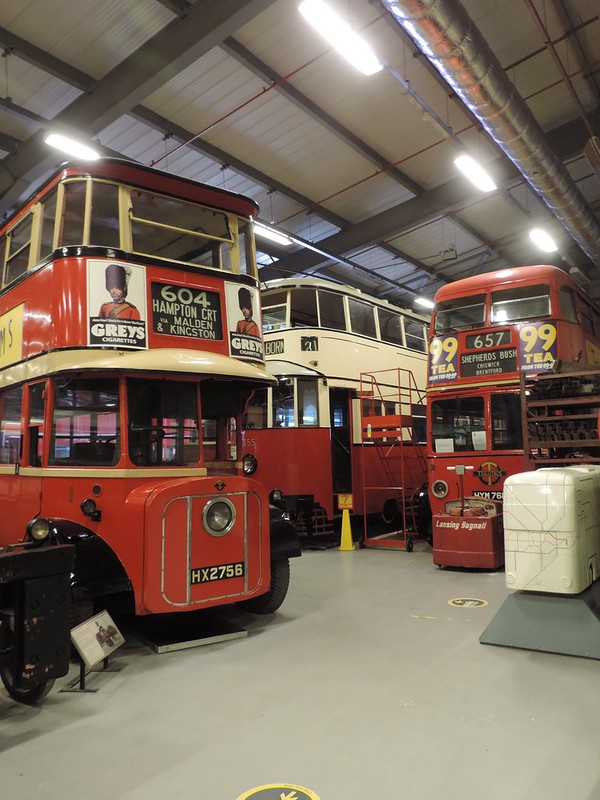
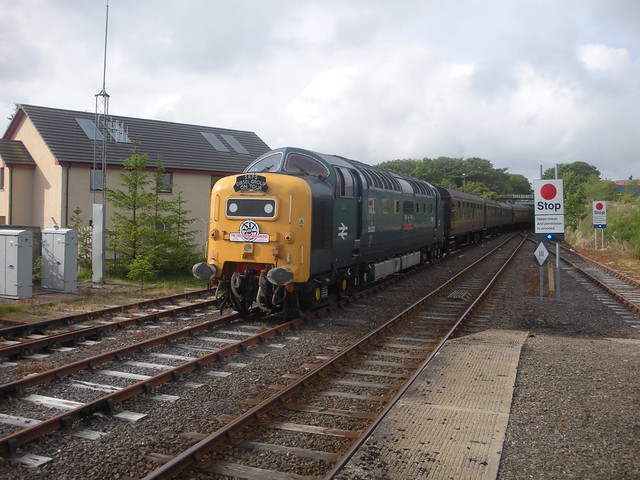
I started this blog 10 years ago to write about trains, trams and trolleys in Gaelic.
I know it’s kind of a niche topic but I thought it’s important that there is a range of different material available in Gaelic and railways are what I’m interested in.
I’ve become very disillusioned with the Gaelic world in the last year or so, however.
Around a year ago, the Gaelic Crisis in the Vernacular Community report came out. The book rightly identified the weakness of Gaelic in traditional communities (as did a variety of previous reports) however, it was also very negative about new speakers and about urban Gaelic speakers.
And rather than leading to a discussion about how to best promote Gaelic in the traditional community – something that everybody in the Gaelic community surely wants to see – the key take-home message for many people seems to have been negativity towards urban Gaeldom and adult learners. Processions of people have taken to social media and old media alike saying that cities and learners get too much funding and too much priority, many calling for cuts in funding and others referring to people using Gaelic in cities as hobbyists. At best for many, people like me are irrelevant to the promotion of Gaelic, and for others we are actually cultural imperialists. And for some, even seeing Gaelic as a national language is an act of cultural appropriation.
The debate has moved from how to promote Gaelic to who is and who isn’t a Gael. An identity-politics debate that I’m not even particularly interested in. More recently, there have been vocal calls for native Gaelic speakers/Gàidheil/Gaels to be given a special indigenous status or and/or for a Parliament for Gaels. Where this leaves fluent learners and people outside the Hebrides, and where it leaves people who don’t think themselves of Gaels is a good question.
Those challenging the views of Gaelic Crisis towards new communities or challenging the ethnicisation of Gaelic online are subject to so much trolling that it just isn’t worth continuing.
This ethnicisation of the Gaelic debate really disturbs me. I feel that reversing language shift should be civic and not ethnic.
If we can’t empower traditional Gaelic communities without disempowering new communities, count me out. Of course, we could easily do this, but in this polarised toxic debate, it has become something of a zero sum game where many advocates of traditional communities see this as incompatible with support for new communities. (Fortunately I don’t think the opposite is true, but I’d be totally against that too!)
It’s important to note that few people in the Gaelic world agree with the ethnicisation of Gaelic. It’s also important to note that most of the people that have been calling for an ethnic definition of the Gaelic community in my experience are themselves learners and don’t belong to the communities that they are trying to gatekeep. I’d also make the important point that most advocates of enhanced support for traditional Gaelic communities have no problem with new communities and new speakers – and I agree strongly with them.
However, in a situation where many people are actively defining learners and cities as, at best unimportant, and at worst actively damaging traditional communities, it is difficult to keep on. It’s particularly difficult to do cheerful content when you are not allowed to say that Gaelic is your own language and you are not considered authentic/Gàidhealach/indigenous to be a member of the ethnically defined Gaelic community.
If I have to be an “ally” or a member of a “diaspora” to use Gaelic as a learner or in a city, count me out.
I should say that this isn’t just me. I know dozens of other people in the Gaelic world in the cities – native speakers and learners alike – who are very very dissolutioned due to ethnicisation of Gaelic and othering of new speakers and urban Gaeldom. The toxic debate is damaging people’s mental health and leading many to leave the Gaelic world or seeking to leave the Gaelic world.
For this reason, I’ve deleted my Facebook, Twitter and Instagram accounts.
For this account, I’m asking – should I stay or should I go?
Should I delete the account or should I keep writing it in English?
Alasdair
Tadhail air Trèanaichean, tramaichean is tràilidhean
Powered by WPeMatico









#/media/File:Broad_Street_station_exterior_geograph-3270123-by-Ben-Brooksbank.jpg)
