Are you a Gaelic speaker or learner or are you interested in the language? The Scottish Parliament is piloting a new fortnightly Gaelic newsletter. This will cover what’s happening in the Parliament in Gaelic for fluent readers, but also provide material in English for those learning the language. We’ll include some other resources for those curious … Leugh an corr de Calling Gaelic learners and supporters. New Parliament Gaelic newsletter launched!
Bha mi ann an Astràlia an Iar san t-Samhain, air cèilidh air mo bhràthair ann am Peairt, agus bha turas thairis air an Outback dha na Goldfields, na “Raointean Òir”, am measg nam fìor bhàrr-phuingean. Bha mi airson a dhol ann fad bliadhna no dhà, às dèidh dhomh dealbhan is aithrisean de bhaile Gwalia fhaicinn, is e aithichte mar “bhaile nan taibhsean”, dachaigh do mhèinneadairean na h-òr-mheinn “Sons of Gwalia” eadar 1896 agus 1963. ‘S e ainm litreachail air a’ Chuimrigh a th’ ann an Gwalia, is a’ chiad mhèinne bheag air a maoineachadh le dithis luchd-bùtha Cuimreach à Coolgardie. Tha am baile mu 830 mìle an ear air Peairt, ach fhuair mi a-mach gu bheil trèana sònraichte (is spaideil) ann eadar Peairt agus Kalgoorlie, am Prospector, seachd uairean a thìde aon slighe, agus le càr air mhàl, mu thrì uairean a thìde eile gu Gwalia. Dh’impich mi mo bhràthair a thighinn còmhla rium, agus thàinig esan agus companach eile. Sgioba Gwalia deiseil!
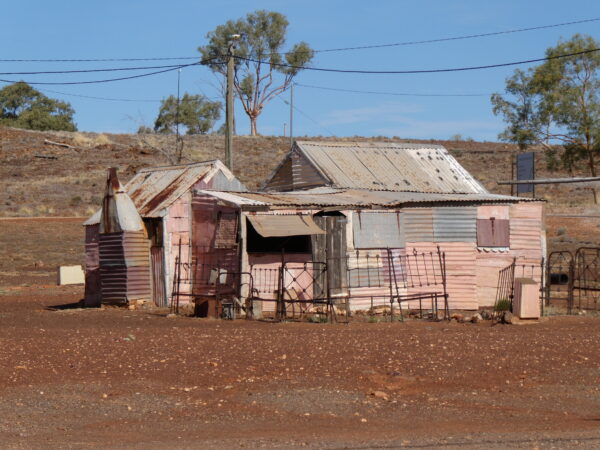
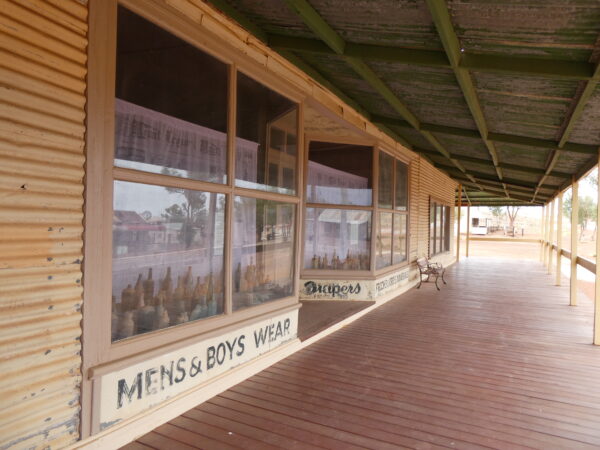
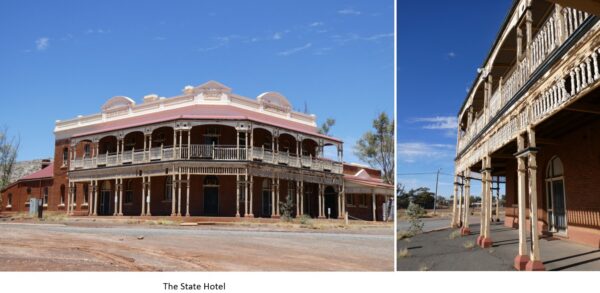
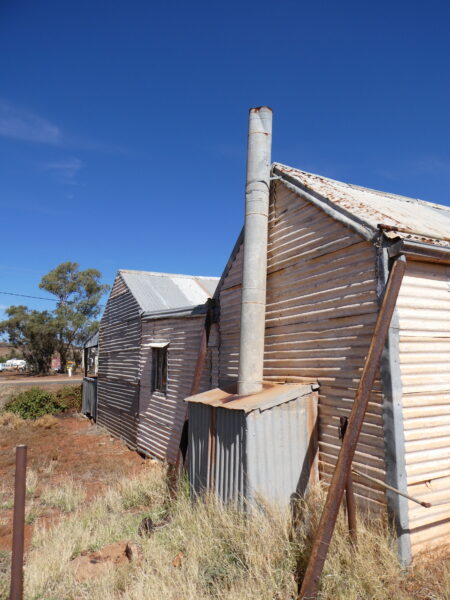
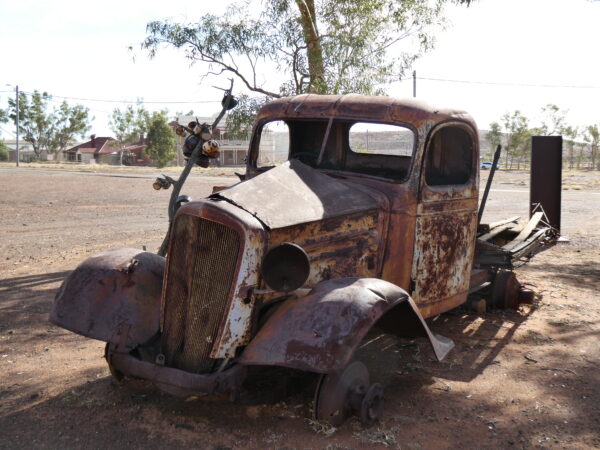
An rud as drùidhtiche ma dheidhinn, ‘s e gun do thog na mèinneadairean na taighean (no bothagan) iad fhèin, is iad a’ cleachdadh an stuth a bu saoire sa ghabhadh, gu h-àraidh iarann preasach, ach cuideachd pìosan fiodha bhochd, no uèir, no meatailt, no pìosan breige, rud sam bith a bha air fhàgail no air thilgeadh a-mach às an obair-mhèinne. Mar sin dh’fhàs baile gu lèir, an ceann ùine le bùth is òsdal is garaids is sgoil bheag, agus seòrsa taigh-seinnse neo-oifigeil (an “sly grog shop”), agus fiù ‘s taigh-osda/talla bhaile, an State Hotel, air a thogail leis an riaghaltas ann an 1903 mar phàirt sreath leithid de ghnothach sna Goldfields, le sùil ri casg a chur air taighean-òil mì-laghail. (Rud nach do shoirbhich buileach…)
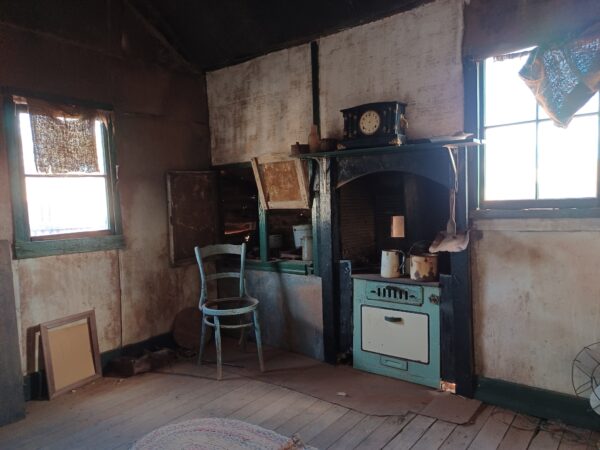
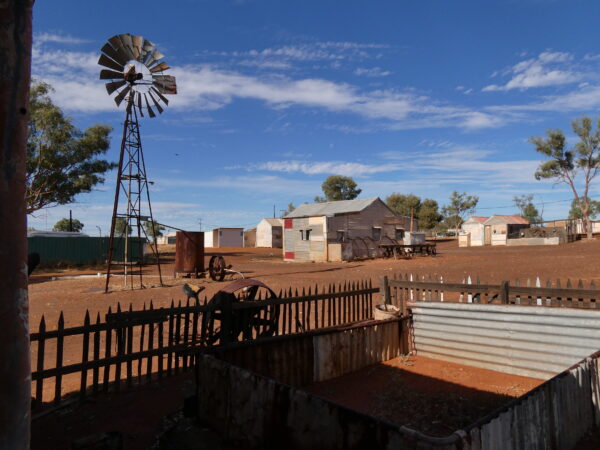
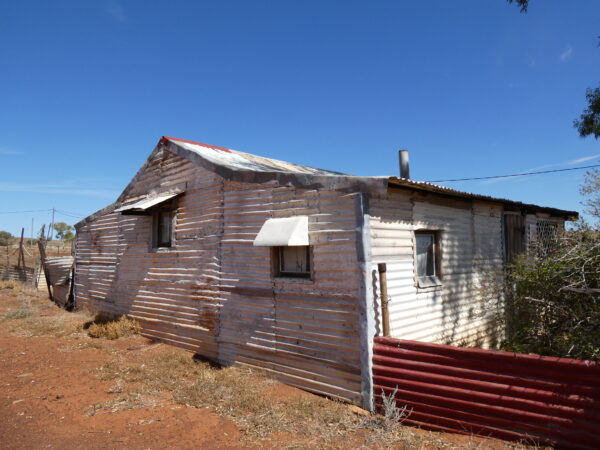
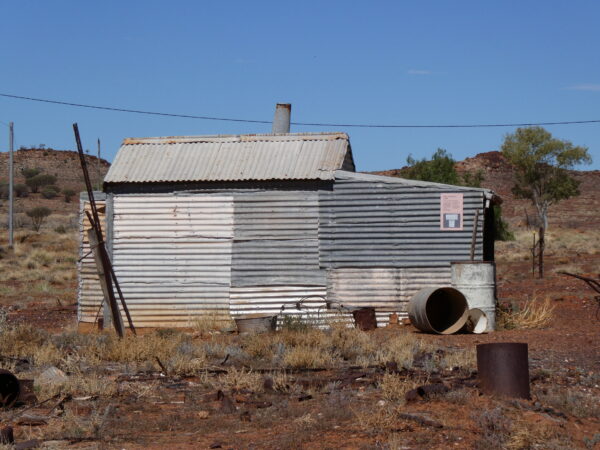
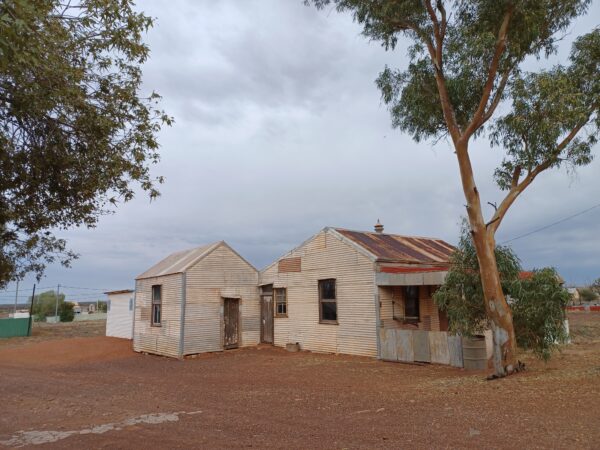
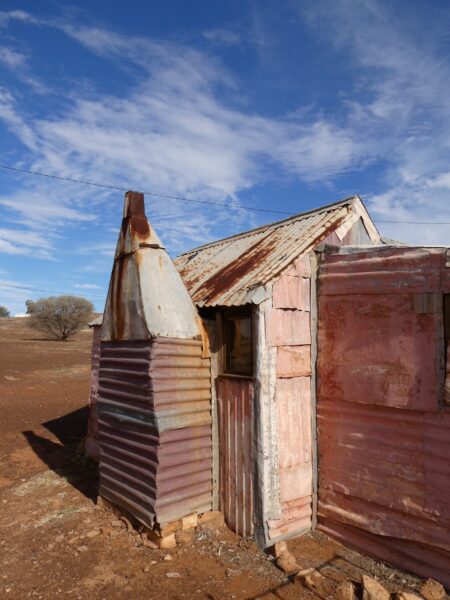
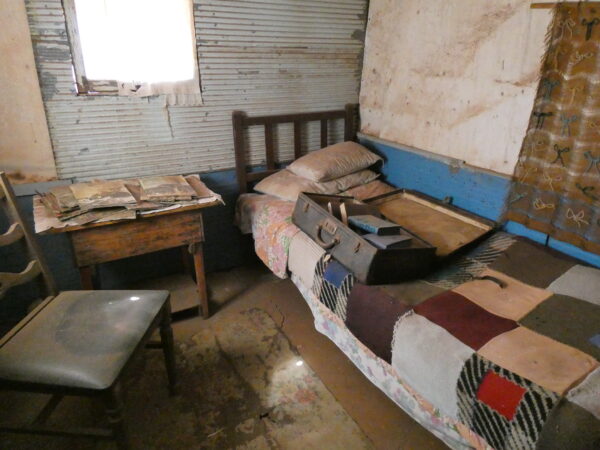
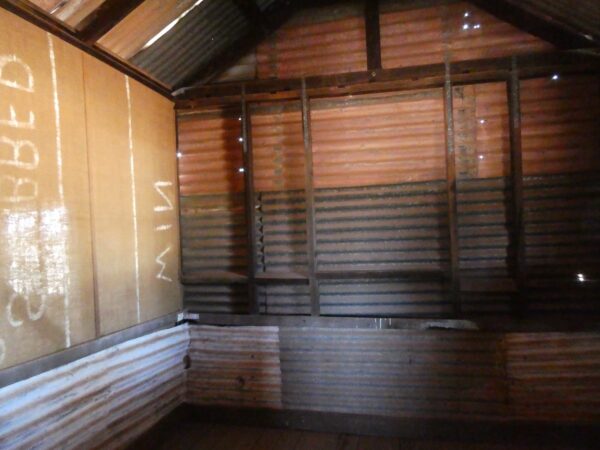
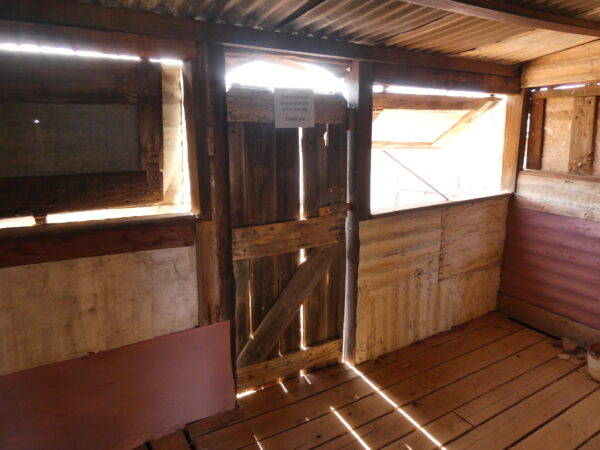
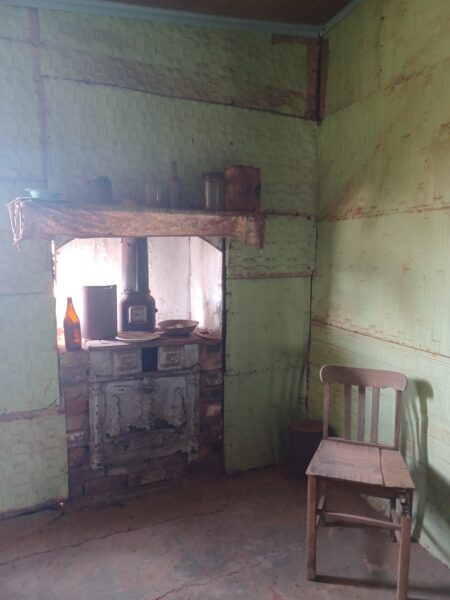
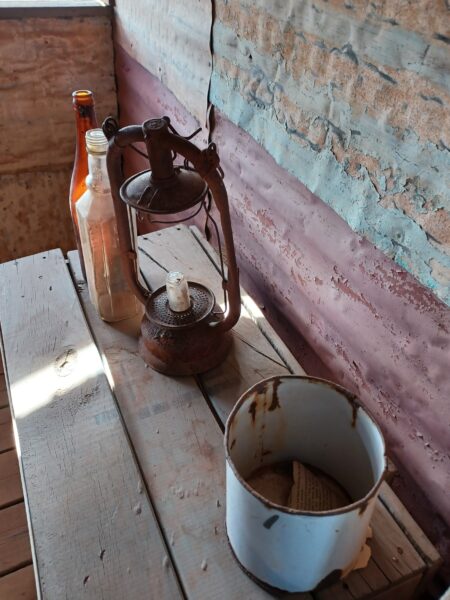
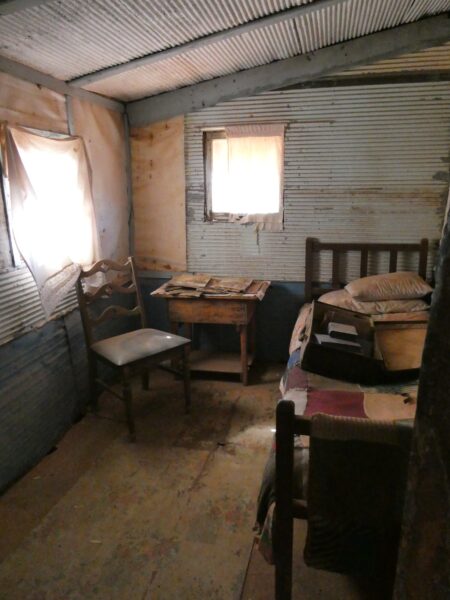
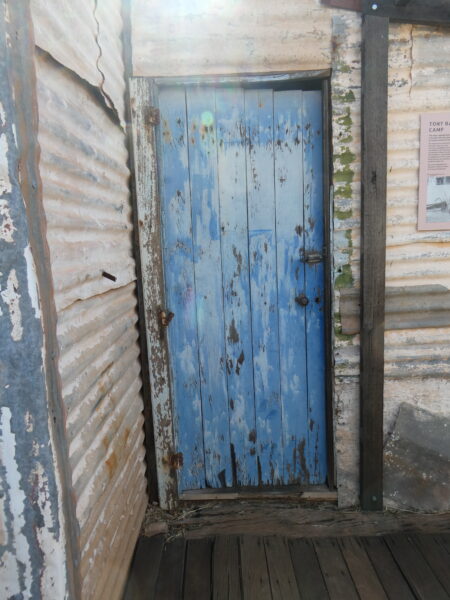
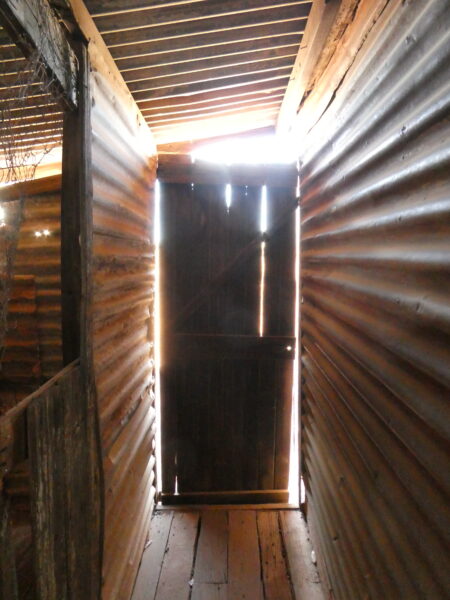
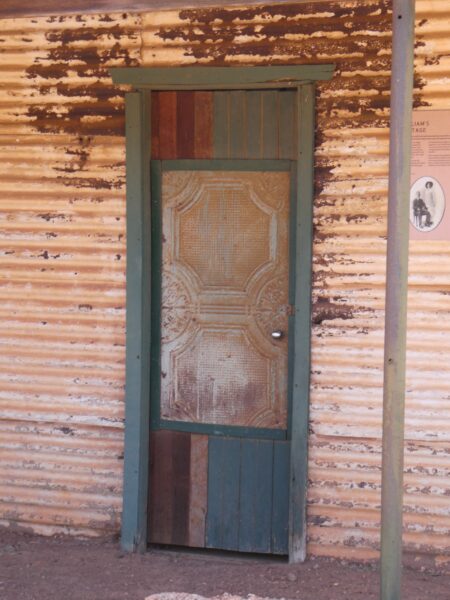
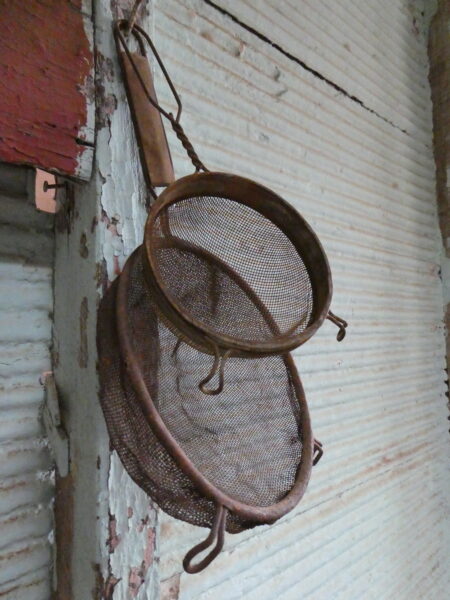
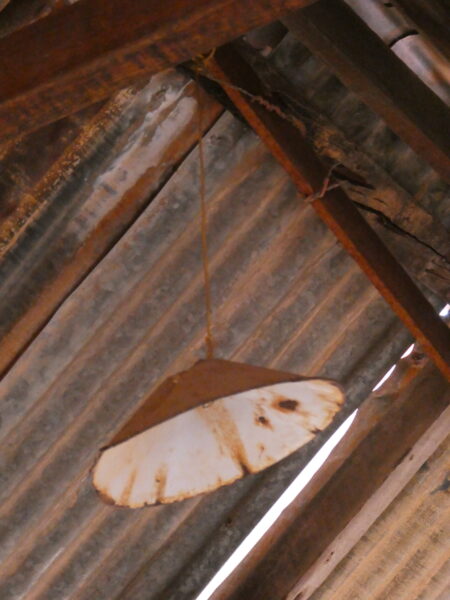
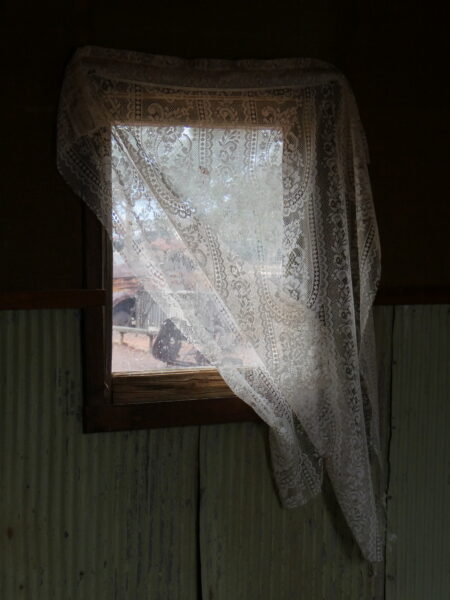
Chuir mi seachad ùine mhòr a’ dol a-steach dha na taighean is thog mi na ceudan de dhealbhan, a dh’aindeoin an teas is nan cuileagan. Chuir e drùidh orm dè cho innleachdach ‘s a bha iad, a’ cruthachadh taighean (gu tric do theaghlaich) à stuth cho bochd. Bha iad air an togail le beart simplidh fiodha is ballaichean is mullach à pìosan iarainn preasaich, le stòbha ann an aon seòmar, agus ‘s dòcha sacan heisean air am peantadh an àite pàipeir-balla. Reoth thu sa gheamhradh is ghoil thu as t-samhradh. Ach dh’fheuch iad ri am fàgail seasgair, snog, le plàideachan air am fighe, dealbhan à ìrisean, rudan beaga às an dachaighean fada air falbh. Chuir e iongantas orm gun do dh’fhuirich co-dhiù 500 daoine an sin, le ach glè bheag de leasachadh, gus dùnadh na mèinne ann an 1963. Daoine calma gu dearbh!
Bha baile eile na bu maireannaiche, Leonora, dà no trì mìle air falbh, far am biodh an luchd-rianachd na mèinne a’ fuireach, ach dha na mèinneadairean bha e na bu phractaigiche fuireach faisg air an obair. Ann an 1911 bha 1,114 daoine a’ fuireach ann an Gwalia. Chan e Breatannaich a-mhàin a bh’ annta (a’ phròifil in-imriche as luachmhoire) – bha eilthirich às an Roinn Eòrpa ann cuideachd, gu h-àraidh às an Eadailt is às an Iùgaslabh, far an robh an suidheachadh eaconamach sònraichte doirbh. Thàinig mòran dòchasaich à Sìona ann cuideachd ach rachadh leth-bhreith dhona a dhèanamh orra. Thill cuid de na h-in-imrichean dhachaigh, ach dh’fhuirich a’ mhòr-chuid fad ghinealach. M.e., b‘ e teaghlach Eadailteach nam Mazza a ruith a’ bhùth fad deicheadan.
Uaireannan chaidh luchd-obrach Eadailteach no Iùgaslabhach a thoirt a-steach leis na ceannardan le tuarasdal na b’ ìsle nuair a bha na mèinneadairean a‘ bagradh a dhol air stailc airson barrachd airgid no chumhaichean-obrach na b’ fheàrr. Sin a rinn Henry Hoover (ceann-suidhe nan SA 1929-33), is e na mhanaidsear-mèinne ann an 1898; gheàrr e na chòraichean-obrach agus na tuarasdail gu geur. (Ach cha robh bail air chosg a thaobh a’ phlana aige airson an taigh aige fhèin, faic gu h-ìosal…)
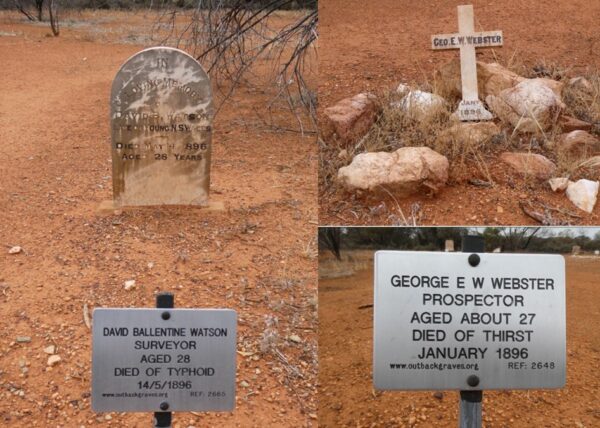
‘S e beatha gu math doirbh a bh’ aca uile gu lèir, agus anns an 1890an thàinig trioblaid eile orra – am fiabhras breac. Bhàs na mìltean anns na Goldfields, le suidheachadh slainteachais cho dona agus cus daoine is beathaichean a’ fuireach air an dinneadh ri chèile ann an campaichean mòra salach, mar aig Kalgoorlie, air “Mìle an Òir”. Thadail mi air cladh faisg air làimh agus bha e uabahsach faicinn an uiread de bhàsan òga aig an uair sin. Cunnartan na mèinne dhaibh gu h-ìosal agus cunnartan eile gu h-àrd, agus tìr gu math neo-mhathach mar dhachaigh. Mar a thuirt Hoover fhèin: “A land of red dust, black flies and white heat.”
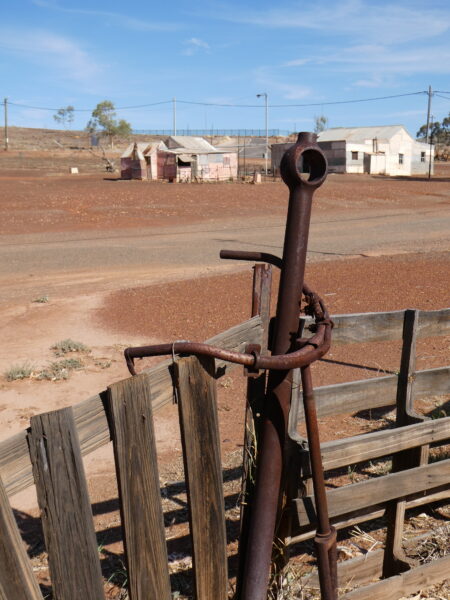
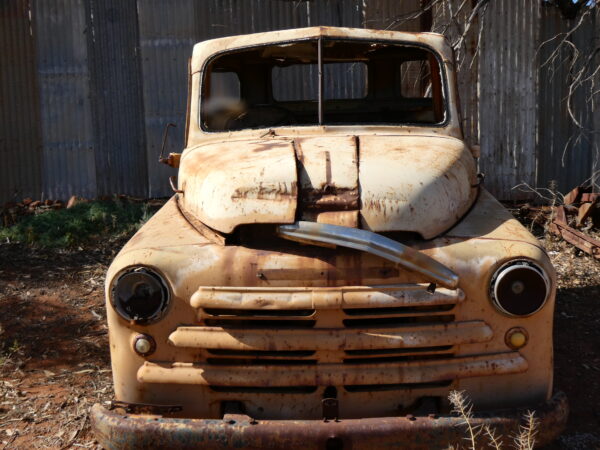
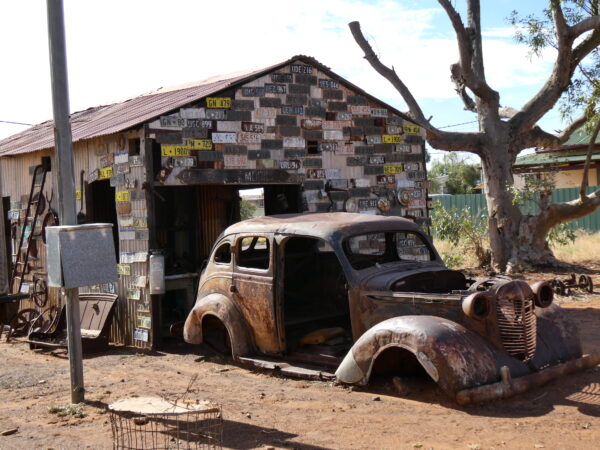
Tha taigh-tasgaidh na seann mhèinne faisg air a’ bhaile an diugh (tha a’ mhèinne air fhosgladh às ùr a-nis), agus dh’fheuch a’ choimhearsnachd mu thimcheall ri cuid de na taighean a dhìonadh is an àth-thogail. Fàgaidh mi sibh le cuid de na dealbhan – tha iad brònach, ach aig an aon àm àlainn (air an dòigh aca fhèin), ach barrachd is sin, tha na taighean nam fianais air nàdar is innleachdachd nan daoine fulangach sin sna bliadhnaichean tràth cruaidh.
I was in West Australia in November, visiting my brother Ross in Perth, and a trip out over the Outback to the Goldfields was one of the real highlights. I’d been wanting to go there for quite a while after seeing pictures and reports about the township of Gwalia, famous as a ”ghost town”, which was home to the gold-miners at the pit “Sons of Gwalia” between 1896 and 1963. Gwalia is a poetic name for Wales, as the original small mine was funded by two Welsh storekeepers from Coolgardie. The town is about 830 miles from Perth, but I found out that there is a special, rather posh train called The Prospector that runs from Perth to Kalgoorlie, about 7 hours one-way, and you can hire a car for the remaining 3 hours or so up to Gwalia. I persuaded Ross to join me and he came along with a pal – Team Gwalia was ready to go!
The most impressive thing about it is that the miners themselves built the “cottages” (or huts), using the cheapest material possible, especially corrugated iron, but also pieces of poor-quality wood, or wire, or metal, or bits of bricks – anything discarded or left over from the mining work. This turned into a complete township, in the course of time with a store, a hostel, a garage, a small school, a sort of unofficial pub (the “sly grog shop”), and even a hotel/village hall, the State Hotel – that was built by the government in 1903 as part of a chain of such establishments, aimed at cutting out the illegal drinking-houses (something that didn’t entirely succeed…).
I spent many hours going into each house and taking hundreds of photos, despite the heat, and the flies. I was struck by how ingenious they were, creating homes (often for families) from such poor materials. The cottages were built with a simple wooden frame, and walls and roofs of scrap pieces of corrugated iron, with a stove in one room, and sometimes painted hessian sacks instead of wallpaper. People would freeze in winter and boil in summer. But they clearly tried to make things cosy and homely with knitted blankets, magazine pictures on the walls, and small mementoes of their distant homelands. It seemed amazing that at least 500 people were still living there, with very little development, till the mine closed in 1963. A tough lot indeed!
There was another more permanent settlement a couple of miles away, Leonora, where the mine administrators lived, but it was more practical for the miners to live near their work. In 1911 there were 1,114 people living in Gwalia. They weren’t all British (the preferred immigrant profile) – there were also immigrants from Europe, particularly Italy and Yugoslavia, where the economic situation was especially difficult. Many hopefuls came from China too, but they were heavily discriminated against. Some immigrants went home, but more stayed, through generations. For example the Mazza family from Italy ran the store for decades.
Sometimes Italian or Yugoslav workers would be brought in at lower wages by the mine bosses when the miners were threatening to strike for higher wages or better conditions. That’s what Henry Hoover did (later US president 1929-33) when he was mine manager in Gwalia in 1898. He cut wages and workers’ rights drastically. (But not his own design for the manager’s house, see below…)
It was a pretty hard life altogether, but in the 1890s another plague fell on them – typhoid. Thousands died in the Goldfields, with the dreadfully unhygienic conditions, and too many people and animals crammed together in huge filthy camps, e.g. at Kalgoorlie, on the “Golden Mile”. I visited a nearby cemetery and it was harrowing to see the number of young people who died then*. The dangers of the mine below, and more dangers above, and an unforgiving land as their home. As Hoover himself said, “A land of red dust, black flies and white heat.”
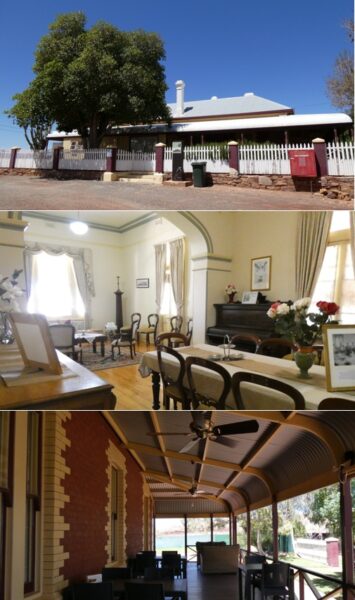
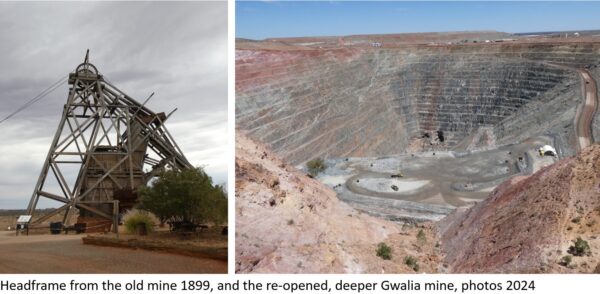
The township now has a nearby museum to the old mine itself (which recently reopened), and the surrounding community has tried to protect and partially restore the homes. I’ll leave you with some of the pictures – sad, and at the same time beautiful (in their own way) , but more than that, the cottages stand witness to the character and resourcefulness of these resilient folk in the hard early years.
A’ coinneachadh gus meòrachadh mu dhualchas, litreachas, òrain is eachdraidh nan Gàidheal is na Gàidhealtachd – tro mheadhan na Gàidhlig. Gach coinneamh ann an Seòmar Bhlythswood, Leabharlann Mhitchell, oidhche Dhiardaoin, 6.30f. Ri fhaighinn air-loidhne tro ‘Teams’ cuideachd – cuiribh fios gun rùnaire airson ceangal-lìn, dà latha ron àm <a_maccoinnich@hotmail.com>.
Meeting monthly on Thursday nights (6.30), Sgoil Ghàidhlig Ghlaschu, to discuss various aspects of Gaelic and Highland language, culture and history. All talks in Gaelic. Meetings accessible remotely via teams. E-mail the secretary, address above, two days before the meeting.
10 Dàmhair
Raghnall Macilledhuibh Oilthigh Dhùn Èideann
Iain Mac an Deòir (1802–72): Eachdraidh Ìle, Dhiùra ’s Cholasa o Bheul nan Daoine
21 Samhain
Ceit Fhoirbeis, BPA; Leas-Phrìomh-mhinisteir is Ministear na Gàidhlig
Bile nan Cànan Albannach.
12 Dùbhl’d
An Oll. Roibeard Ó Maolalaigh Oilthigh Ghlaschu
Ainmean-àite Gàidhlig ann an Carraig Shiorrachd Àir
16 Faoill’ch
Mgr Dòmhnall Moireasdan BBC Naidheachdan
Fred MacAmhlaigh: an duine, an tùsaire craolaidh, an sgoilear agus am bàrd
13 Gearr’
An Dr Michel Byrne Oilthigh Ghlaschu
‘Co-chruinneach’ 1831: duanaire Peairteach
20 Màrt
Beth Frieden Glaschu
Bàrdachd agus còmhradh
24 Gibl’n
An Dr Petra Poncarová & an Dr Tòmas MacAilpein, Oilthigh Ghlaschu
Ballrachd bliadhnail a’ Chomainn, £25; ballrachd teaghlaich, £30. Faodaidh aoighean £5 a phàigheadh rèir an toil. Oileanaich is sgoilearan – an asgaidh.
Annual membership, £25, family membership, £30, guests, suggested contribution, £5.
Students and schoolchildren free.
Le taing gu Glaschu Beò airson an taic ann bhith a’ cleachdadh Leabharlann Mitchell
Chaidh stiùiriche ùr neo-ghnìomhach ainmeachadh do Sgrùdadh Alba às dèidh farpais fastaidh fhosgailte. Tòisichidh Pàdraig Bartlett, an tagraiche soirbheachail, air bòrd Sgrùdadh Alba air 22 Faoilleach 2025. Tha an dreuchd airson teirm stèidhichte de thrì bliadhna, le cothrom air ùrachadh. Feumar 24 latha sa bhliadhna a chaitheamh san dreuchd agus is e am pàigheadh làitheil … Leugh an corr de Fios naidheachd – Stiùiriche neo-ghnìomhach ùr do Sgrùdadh Alba air ainmeachadh
Tha ionad fiosrachaidh Pàrlamaid na h-Alba air Pàipear-ullachaidh air Bile nan Cànan Albannach fhoillseachadh a tha a’ toirt seachad geàrr-chunntas air susbaint a’ Bhile agus air na h-atharrachaidhean a rinneadh aig Ìre 2. Leugh am Pàipear-ullachaidh an seo sa Ghàidhilg. Tha e ri fhaighinn ann am Beurla agus Scots cuideachd. Alasdair MacCaluim
Bu chòir cothrom a bhith aig a h-uile duine ann an Alba cothrom co-ionnan a bhith aca com-pàirteachadh leis a’ Phàrlamaid aca, ge b’ e dè an cànan a th’ aca, a’ gabhail a-steach coimhearsnachdan Bodhar agus Bodhar-dall. Gus am prionnsabal seo a chur an gnìomh airson nan coimhearsnachdan sin, tha sinn air am Plana … Leugh an corr de Plana BSL ùr air fhoillseachadh
At Guthan nan Eilean we’re always pleased to make new links with other groups doing similar work, so we were delighted to hear from Sharon Pisani that ‘Ilħna Karkariżi’ – Voices from Birkirkara – had taken an interest in her Extensions work on Tradizzjonijiet tal-Milied f’Malta, and wanted to add some of her videos to their Internet Archive. We were more than happy to agree! You can now find her interview with Carmel Cauchi and some of his poetry readings alongside many other locally recorded Birkirkara voices on their site:
This is an encouraging opening to 2025 as we aim to further develop our “Language Capture and Curation” model while sharing Gaelic – and other! – voices, through narrative, verse, and free conversation…
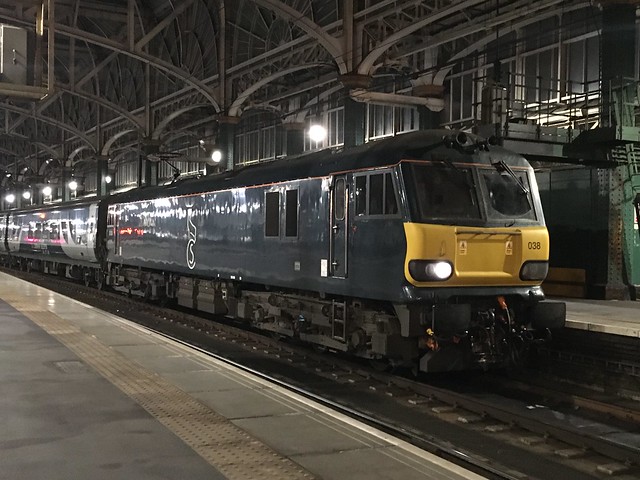
Tha mi gu math dèidheil air a’ Chaledonian Sleeper eadar Alba agus Lunnainn. Mar sin, cha b’ e ruith ach leum dhomh tiocaid a chur air dòigh ann am fèill-reic na Nollaig.
Fhuair mi tiocaidean eadar Glaschu agus Lunnainn air £37 gach slighe airson seataichean– abair bargan!
An Cadalaiche, Glaschu Mheadhain
Tha mi a’ dol ann air Diardaoin 9 Faoilleach agus a’ tighinn air ais Dihaoine 10 Faoilleach (bhithinn air a dhol ann Disathairne ach chan eil an trèana a’ ruith Disathairne airson adhbhar air choireigin).
Tha tòrr agam ri dhèanamh fhad ’s a bhios mi ann.
Tha mi a’ dol ann airson safari rèile, mar a bhiodh tu an dùil, a’ dol air loidhnichean nach do dh’fheuch mi roimhe, ach tha mi cuideachd a’ dèanamh beagan turasachd ciùil.
Tha mi gu math dèidheil air a’ Chlash agus air Big Audio Dynamite, an còmhlan aig Mick Jones às dèidh làimh. Mar sin, tha mi ag iarraidh an Trellick Tower, far an robh Mick Jones a’ fuireach uair fhaicinn. Tha an tùr ri fhaicinn sa bhideo aig B.A.D airson Sightsee MC, ann an grunn dealbhan sanasachd aig a’ chomhlan agus cuideachd air dealbh comhdach an LP TIghten Up Vol 88 aca, ann an dealbh a pheant Paul SImonon (cluicheadair beus a’ Chlash) dhaibh.
Tighten up Vol 88 – chithear an Westway agus an Trellick Tower.
Air taobh deas na h-aibhne, tha mi airson a dhol a dh’fhaicinn beagan a bharrachd eachdraidh ciuìl – am plac air a’ flat ann an Deptford far an robh David Knopfler agus John Illsley a’ fuireach agus far an do stèidhich iad Dire Straits còmhla ri Mark Knopfler. Còmhla ri iomadh rocair eile, bha Dire Straits nan gateway drug dhomh a-steach gu ceòl roc cruidh is meatailt!
Agus ann am meadhan a’ bhaile tha mi a’ dol gu Sràid Regent far a bheil plac ann a’ comharrachadh gun robh Nick Mason, Rick Wright agus Roger Waters nan oileanaich ann aig Regent Street Poly (Oilthigh Westminster a-nis) nuair a stèidhich iad Pink Floyd.
A thaobh còmhdhail, tha mi airson a dhol air meur-loidhne Greenford far a bheil iad a’ dèanamh deuchainnean air trèanaichean bataraidhean-dealanach.
Agus tha mi airson an uiread ‘s a ghabhas den Overground a dhèanamh a-nis. Am measg àiteachan eile, tha mi a’ dol gu Chrystal Palace far a bheil busaichean dealanach ùra a tha a’ coimhead coltach ri tramaichean.
Abair turas math a bhios ann! Nì mi aithris an seo air mar a chaidh dhomh às dèidh làimh.
Bidh mi a’ dol air safari rèile gu loidhne nach fhaca mi riamh roimhe gach bliadhna eadar an Nollaig agus a’ bhliadhna ùr. Tha mi air a dhol gu Wrecsam is Liverpool, Barrow in Furness, Lunnainn, Manchester, Contae an Dùin is eile thar nam bliadhnaichean.
Blyth Harbour Commissioners Number 2, 0-4-0ST, Taigh-tasgaidh/Rathad-Iarainn Smùid Stephenson, An Caisteal Nuadh
Am-bliadhna, chuir mi romham a dhol gu Rathad-iarainn Stephenson (no an North Tyneside Railway) beagan a tuath air a’ Chaisteal Nuadh.
Gu fortanach, tha an loidhne seo furasta a ruigsinn air còmhdhail phoblach.
Bha trioblaidean ann le droch thìde agus bha an trèana agam eadar Glaschu is Carlisle le TPE air a chur dheth, ach bha e ceadaichte a dhol ann slighe eile, le ScotRail/LNER taobh Dhùn Èideann agus mar a thachair e, bha sin na bu luaithe co-dhiù. Mar sin, chan fhada gus an robh mi sa Chaisteal Nuadh far an do ghlac mi am bus gu North Shields far a bheil an rathad-iarainn.
Air an t-slighe ann, chaidh sinn tro Wallsend far a bheil soidhnichean dà-chànanach ann air an t-slighe a-steach dhan bhaile – ann am Beurla agus Laidinn – a’ comharrachadh eachdraidh Ròmanach na sgìre.
Tha eachdraidh inntinneach aig Rathad-iarainn Stephenson cuideachd. ‘S e rathad-iarainn fìor aosta a tha seo, agus ’s e slighe-carbad no wagonway a bh’ ann mus robh trèanaichean smùid ann.
Chaidh a chleachdadh fad iomadh bliadhna airson obair guail is gnìomhachais ach ann anns na 1970an, chaidh a chleachdadh airson rud gu math eadar-dhealaichte – bha e na thrac deuchainn airson an Tyne and Wear Metro nuair a bhathar a’ togail an t-siostaim, a dh’fhosgail ann an 1980.
Mapa de mhetro Tyne is Wear agus de loidhne ùr Northumberland
Nuair a dh’fhosgail am meatro is nuair a bha na trèanaichean ùra uile deiseil airson seirbheis, dhùn an loidhne deuchainn ach rinneadh taigh-tasgaidh agus rathad-iarainn glèidhte de na seadaichean agus den trac. Tha fòcas sònraichte air an sgìre fhèin agus air eachdraidh shòisealta is gnìomhachais an àite.
Tha an taigh-tasgaidh beag ach fìor mhath. Tha eisimpleirean de shunteran den t-seòrsa a bha gan cleachdadh anns na mèinnean agus loco bho 1816 nuair a bha Ear-thuath Shasainn aig cridhe nan rathaidean-iarainn. Seo Billy, a tha cha mhòr 10 bliadhna nas sine na Stephenson’s Rocket. Seo an treas loco maireannach as sine san t-saoghal.
Billy, Taigh-tasgaidh Stephenson
A bharrachd air seann thrèanaichean smùid, tha gu leòr trèanaichean dealanach ann cuideachd mar an loco seo a chaidh a thogail ann an 1909.
Loco dealanach E4 bho 1909
Às dèidh dhomh sùil a thoirt air an taigh-tasgaidh, bha an t-àm ann a dhol air an trèana. Air an t-slighe dhan stèisean aig Middle Engine Lane, mhothaich mi gu bheil an rathad-iarainn tòrr nas spaideile na tòrr de na rathaidean-iarainn glèidhte eile a chunnaic mi. Tha e follaiseach gu bheilear a’ coimhead às a dheth gu math leis an t-seada is an stèisean agus na beingean is na feansaichean uile ann am fìor deagh staid agus air am peantadh gu math. Agus gu sònraichte, bha na locotohan uile a’ coimhead air leth spaideil.
Shunterean dìosail aig Rathad-iarainn Stephenson
Tha an loidhne mu dhà mhìle a dh’fhaide agus tha i gu math diofraichte ri rathaidean-iarainn glèidhte àbhaisteach. An àite a bhith a-mach air an dùthaich, tha e ann an ionad gnìomhachais is ionad bhùithean – càr coltach ris the Fort ann an Glaschu.
A’ chiad rud a chì thu bhon trèana smùid nuair a a dh’fhàgas tu an stèisean, ’s e meur de Phizza Hut. Saoilidh mi gur e deagh rud a bhiodh ann salad gun crìoch ithe bhon t-salad bar aca agus a bhith a’ dèanamh beagan trainspotting aig an aon àm!
‘S e talamh post-industrial a tha seo agus aig taobh-tuath na loidhne, tha ionad gnìomhachais is ionad bhùithean agus an uair sin taighean-bathair is an uair sin taighean ùra. Leis an taigh-tasgaidh agus an turas trèana, chì thu na h-atharrachaidhean uile sa chomann shòisealta agus san eaconamaidh bho na 1980an air adhart.
Ma tha thu eòlach air Glaschu, tha e car coltach ri bhith a’ dèanamh rathad-iarainn glèidhte den t-seann rathaid-iarainn ri taobh an slip-road eadar an M8 agus Braehead a tha an uair sin a’ dol tron ionad-gnìomhachais!
Bha an trèana air a tharraing le einnsean smùid beag dearg agus bha i loma-làn de phàrantan is seann-phàrantan a bha airson rudeigin spòrsail a dhèanamh le an cuid chloinne eadar an Nollaig agus Oichche Challainn. Agus bha e follaiseach gunh robh turas air trèana smùid a’ còrdadh ris an fheadhainn bheaga.
Cha bhi an loidhne seo a’ faighinn mòran sanasachd agus is bochd sin oir tha i sgoinneil agus furasta a ruigsinn bho Alba.
Mholainn Rathad-iarainn agus Taigh-tasgaidh Stephenson gu mòr.