Beryl Bailey Symposium

Le Gordon Wells

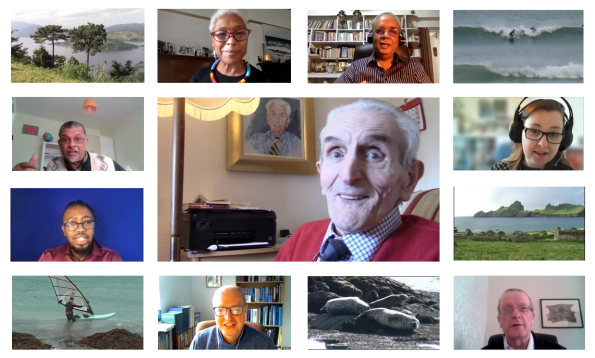
Here’s welcome news of an exciting event celebrating the 20th anniversary of the Jamaican Language Unit (JLU) at the University of the West Indies, with whom the University of the Highlands and Islands recently signed a Memorandum of Understanding on the back of joint work on Mediating Multilingualism with the Language Sciences Institute (LSI).

BBS (1) (1) (1)

This symposium is livestreamed on the Braadkyaas Jamiekan YouTube channel – the JLU’s media platform which provides a community-facing link for speakers of Jamaican, in much the same way as Island Voices has aimed to bridge gaps between academic linguists and vernacular Gaelic speakers in the Hebrides.

Any successful language revitalisation or normalisation strategy or plan will not be developed in isolation from the real world around it. That is surely a truism, yet worth repeating in a context where the detailed and demanding practical work entailed requires careful, even microscopic, attention to the actual “facts on the ground”. For best results in a highly challenging task the critical linguistic gaze must surely still be both inward and outward. Insofar as Island Voices can contribute to a wider appreciation and re-valuing of the Gaelic language in hopeful anticipation of renewed community use, that is why this project, alongside its local Hebridean capture and curation work, has from the start been multilingual in orientation, and actively seized any opportunity to build links with other language communities who might find their own continuity or development under similar threat.

The applied linguistic collaboration between the JLU and the LSI has included the creation of Jamaican versions of various Island Voices films alongside other foundational media and corpus work, in the hope that this Hebridean-Caribbean language link can be further developed going forward. Creole linguistics and the languages of the Caribbean tell an illuminating story, which pioneering Jamaican linguist Beryl Bailey helped uncover. It contrasts interestingly with that of Scottish Gaelic. Nevertheless fruitful links, perhaps particularly in relation to oral and bilingual skills and resources, are there to be seen, explored, and developed. This event is open to all comers. Happy 20th Birthday, JLU!


Tadhail air Island Voices – Guthan nan Eilean

Powered by WPeMatico

Maithili Film: Taigh Chearsabhagh

Le Gordon Wells

Udaya NachiketaUnder his pen name ‘Nachiketa’, poet and professor Udaya Narayana Singh presents his Maithili version of the Island Voices film about the Taigh Chearsabhagh Museum and Arts Centre:

एखन अहाँ लोकनि जे तथ्य-चित्र देखै जा रहल छी, ततय स्कॉटलैंड केर आउटर हेब्रिड्स मे स्थित उत्तरी उइस्ट के पूर्वी भाग मे लोचमैडी मे जे संग्रहालय आ’ कला केंद्र अछि – जकर नाम भेल ‘थइ ख्यैर्सवाग़ संग्रहालय एवं कला केंद्र’ – तकर एकटा वर्णन मैथिली मे प्रस्तुत करै जा रहल छी हम – उदय नारायण सिंह ‘नचिकेता’.

Close followers of Island Voices’ collaborative work with colleges and universities in Scotland and overseas will already be familiar with Udaya’s voice and aspects of his work, from his many contributions to Mediating Multilingualism and Talking Points (with Norman Maclean). But it’s a special pleasure now to hear him actually voicing the language of his father, about and for which he has written and spoken so extensively and authoritatively on various other platforms. As part of our “Sharing Gaelic Voices” theme, we’re delighted to here add Maithili to our Other Tongues collection!

Here is the Maithili version of the Island Voices documentary on Taigh Chearsabhagh, North Uist, translated and narrated by Professor Udaya Narayana Singh – ‘Nachiketa’. YouTube’s Closed Caption subtitles are also enabled, so you can read the Maithili text as you listen (if you wish), or you can choose instead to read automatically generated translations into many other languages.

A Clilstore unit has also been created here: http://multidict.net/cs/11337. On this platform the embedded video is shown alongside a scrollable text which allows you to click on any word you don’t know to access an online dictionary translation.

MaithiliClilstorePopup


Tadhail air Island Voices – Guthan nan Eilean

Powered by WPeMatico

Còmhradh air crìonadh nan cladaichean

Le Gordon Wells

TeaandScones

In our second community recording for Aire air Sunnd there are two new features. Firstly we’re very grateful to the Tobar an Dualchais project, and of course to the next-of-kin, for making a recording of Ruairidh na Càrnaich available for discussion in the same manner we used for “Còmhradh air Blàr Chàirinis“. This was a suggestion and request that came from the Comann Eachdraidh Uibhist a Tuath Gaelic group themselves, to which Flòraidh Forrest at Tobar an Dualchais responded immediately and most helpfully, going the “extra mile” to additionally commission a transcription of the recording, which has also been a great help in creating a Clilstore unit for the full YouTube clip. It was Ùisdean’s idea to pick this particular clip, in which Ruairidh talks about historical coastal erosion in North Uist, in a recording made in 1958. With climate change now such a “hot topic” it makes particularly interesting listening to hear how it was thought about and discussed in times gone by.

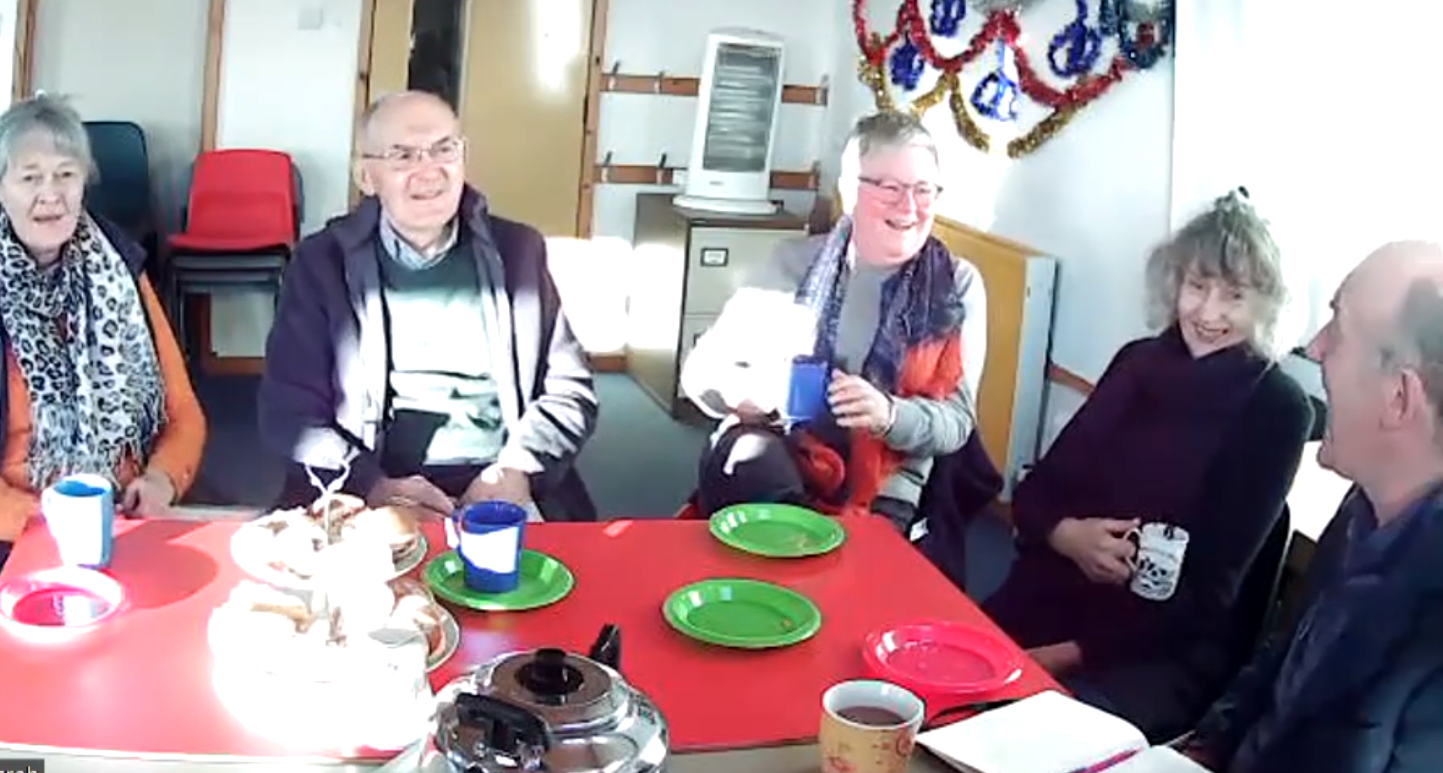
Secondly, we also experimented with a “hybrid” format for the meeting, with most of the participants meeting together in Sgoil Chàirinis, while a couple of others joined in on Zoom. Obviously, it’s easier to hold a conversation with people all in the same room together, though that does pose recording challenges, particularly when folk are quite naturally more likely to all talk at once, and you’re trying to use the ordinary everyday recording equipment we all now have to hand in our phones or laptop computers. So it was interesting to see how that would work with some people also joining in remotely. We’ve done some editing with the final recording to select “best bits” where the recorded conversation is clearest. So we have missed some parts out, but hopefully viewers will still get a good idea of how the discussion went, after listening to Ruairidh’s high quality audio recording in full.

We have again added Closed Caption subtitles as an optional extra, and these can be auto-translated into a wide range of languages, including English, from the original Gaelic, using the YouTube settings wheel. It may be worth bringing to the attention of Gaelic learners that you can also slow down the playback speed of the clip (without altering the pitch!) if there are any parts that you struggle to follow in real time.

Members and supporters of Comann Eachdraidh Uibhist a Tuath, the North Uist Historical Society, listen to and talk about Ruairidh na Càrnaich’s Gaelic discussion of Uist coastal erosion with John MacInnes, as presented on the Tobar an Dualchais website. Part of the Ideas Fund “Aire air Sunnd” project, in which the Universities of Aberdeen, St Andrews, and the Highlands and Islands team up with Island Voices to provide research support for well-being initiatives on the island.

The full details of the recording of Ruairidh na Càrnaich are as follows: Cunntas Air Crionadh Nan Cladaichean Ann An Uibhist A Tuath, Roderick MacDonald, (contributor), John MacInnes, (fieldworker), ref: SA1958.171.B4, the School of Scottish Studies Archives, the University of Edinburgh. Permission, which is gratefully acknowledged, has been granted for this use only.

The full transcript is also available as a Wordlinked Clilstore unit here – http://multidict.net/cs/11280 – and here – https://clilstore.eu/cs/11280.


Tadhail air Island Voices – Guthan nan Eilean

Powered by WPeMatico
Jamiekan Vorzhan

Le Gordon Wells

Kadeyne Marshall“Norman luk api pan fiim tuu piej . Di nyuuz bou di wok dem ina Lochboisdale riili gud, an elp buus op kanfidens ina wan komyuuniti we a chrai aksep se nyuu teknaliji a kom bout. Di regila advataisment dem an komyuuniti fiicha mek evribadi memba di sorvis dem we de bout an mek dem tankful se dem liv de.” (Jamiekan)

“Gu dearbh, tha coltas toilichte air Tormod air an dà dhuilleag aige. ’S e naidheachd air leth a th’ ann cuideachd mu na h-obraichean ann an Loch Baghasdail, agus cuiridh sin ri misneachd ann an coimhearsnachd a tha airson buannachd fhaighinn a-mach às an teicneòlas ùr. Bidh sanasan agus sgeulachdan bhon choimhearsnachd a’ toirt gu aire a h-uile duine na seirbheisean a tha ri fhaighinn, agus na h-adhbharan eile a th’ aca airson fuireach an seo.” (Gàidhlig)

“Norman is indeed looking happy in his two-page spread. The news about the jobs in Lochboisdale is excellent, and helps to boost confidence in a community wishing to embrace the potential of new technology. Regular advertisements and community features remind everyone of the services that are available and why they appreciate living here.” (English)

Kadeyne Marshall’s narration last year of Di Nyuuzpiepa was the third Jamaican version of an Island Voices film, and complements Hugh Campbell’s Gaelic Jorni and Dijitaizieshan Senta, all provided through the Jamaican Language Unit of the University of the West Indies, thanks to Audrey West‘s inspired introduction. Following the 2022 signing of a Memorandum of Understanding with the University of the Highlands and Islands, we hope to see further collaborative work developing out of these small but concrete initial steps with the Jamaican Language Unit and their media channel Braadkyaas Jamiekan.

Followers of Island Voices who have sampled our Talking Points page will also be familiar with the voice of Dr Joseph Farquharson, the Jamaican Language Unit co-ordinator, discussing – in English – various sociolinguistic points arising from the Normal Maclean Saoghal Thormoid recordings with academic and community partners. As part of the JLU 20th anniversary celebrations, you can hear him here – in Jamaican – explain more about the work of the unit. It’s a fascinating story of language study and linguistically-informed language activism from another island context.

Island Voices co-ordinator Gordon Wells was particularly interested to hear to the name of Robert Le Page mentioned – a relatively unsung but key sociolinguistic pioneer who headed the department at York University where Gordon’s own linguistic career began. Saoghal beag…


Tadhail air Island Voices – Guthan nan Eilean

Powered by WPeMatico
Maltese Seatrek to “Santa Kilda”

Le Gordon Wells

SantaKildaWe’re deeply indebted to Sharon Pisani, our Maltese “Island Voice”, for the latest addition to our “Other Tongues” collection! This takes up to 22 the number of languages in which we have Island Voices films. Abair ioma-chànanas!

We first came into contact with Sharon through Comann Eachdraidh Uibhist a Tuath, the North Uist Historical Society, for whom she’s doing great work in supporting the “Aire air Sunnd” project.

Based at St Andrews University, where she’s doing doctoral research on augmented reality, she’s somehow also found the time to translate and record a Maltese version of our Series Two Enterprise “Seatrek to St Kilda” film. Apparently, the island theme struck a chord!

And for anyone learning Maltese, or who perhaps just wants to see what it looks like written down, we’ve also created one of our trademark Clilstore units – http://multidict.net/cs/11181 – which combines the video with an online transcript wordlinked to online dictionaries.


Tadhail air Island Voices – Guthan nan Eilean

Powered by WPeMatico

COOL alternative!

Le Gordon Wells

A cool blue facelift is now available at the click of a mouse to go from any original Clilstore link on the Island Voices website (or elsewhere) to the fresh-faced clilstore.eu alternative. Check the new button in the top right corner of the media screen to find your way from this:

COOLbuttonClilstoreHighlight

To this!

COOLClilstoreNorman

Many thanks again to Caoimhín at Sabhal Mòr Ostaig for constant vigilance and inventiveness!


Tadhail air Island Voices – Guthan nan Eilean

Powered by WPeMatico

Stòras Beò: Coinneach & Maighread

Le Gordon Wells

CandMmontageHere’s a new departure with some well-known and well-loved faces. Comann Eachdraidh Sgìre a’ Bhac (Back historical society) have been producing home-grown videos for YouTube for a while now, many of them fronted by Coinneach MacÌomhair, recently retired after decades of sterling service with BBC Radio nan Gàidheal. In the video below, he’s joined by renowned singer Maighread Stiùbhart as they take viewers on a walking tour of Col Uarach.

It’s a remarkable film, in which the presenters’ deep knowledge and love of their home turf shine through, beautifully expressed in Gàidhlig Sgìre a’ Bhac. The video has been online for a few months now, but there’s been a new development – the addition of CC subtitles (which you can switch on or off, according to taste). This has been made possible following meticulous extra work by Maighread to transcribe the entire video so that it can be added to the Stòras Beò nan Gàidheal collection. And as followers of Guthan nan Eilean know, once the Gaelic subtitles are up, YouTube settings will also offer you auto-translation into many other languages – English included!

Plus, the “Stòras Beò” treatment means you can also access the full wordlinked transcript online through this Clilstore unit: https://clilstore.eu/cs/10540

Naturally, we’re delighted at Island Voices to be able to work with another local history society in the Western Isles. We hope such partnerships will continue to blossom and grow!


Tadhail air Island Voices – Guthan nan Eilean

Powered by WPeMatico

Taisce Bheo: Aodán Ó Cearbhaill

Le Gordon Wells

AodanAodán Ó Cearbhaill from Gaoth Dobhair speaks to Colm Mac Giolla Easpaig.
In the first part Aodán describes his family background and his teaching career to date.

He goes on to detail the career break he took to teach Irish in Nova Scotia. In preparation for this role, Aodán describes how he learnt Scottish Gàidhlig and this leads him and Colm to discuss the similarities and differences between the Donegal dialect and Gàidhlig.

Finally, Aodán describes his affinity with Tory Island, the birthplace of his father, and recites a famous folklore story about how Colm Cille came to bring Christianity to the Island.

A wordlinked transcript alongside the embedded video is available here: http://multidict.net/cs/10578

In the second part of the conversation, Aodán describes some customs and superstitions from Tory Island, most notably the story behind the Tory soil that keeps rats at bay. They discuss the musical heritage of the island before Aodán sings “An Buachaill Deas Óg”, and they chat about how Aodán is newly married and living in the area.

This leads them to discuss the fate of this rural area. Aodán explains his fear about the future of the language but also his hopes for tourism in the area. Planning issues are discussed before Aodán details the polytunnel he had installed in his new home. They end the conversation with Aodán describing the unique manner in which he would spend a win on the National Lottery, and he finishes with a rendition of the renowned Tory Island song “Amhrán na Scadán”.

A wordlinked transcript alongside the embedded video is available here: http://multidict.net/cs/10580

This is the third set of Irish recordings in the Taisce Bheo na nGael project in which the UHI Language Sciences Institute with Sabhal Mòr Ostaig and Soillse, together with Irish partners, record the natural speech of Irish and Scottish Gaelic speakers in their own communities with user-friendly equipment and techniques. We are again indebted to Dr Gearóid Ó Domagáin of Ulster University for his meticulous work on the transcriptions.


Tadhail air Island Voices – Guthan nan Eilean

Powered by WPeMatico

Karaoke sa Ghàidhlig

Le Gordon Wells

Roll over, Beethoven!

Irish-speaker Seán Ó Muiris has announced a new voluntary and non-profit initiative to replicate his work in producing an Irish language karaoke repertoire with a parallel Scottish Gaelic stream. First fruits can be tasted in the YouTube link above, with his rendition of Runrig’s classic “Alba”.

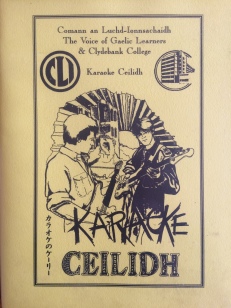
Scottish Gaelic enthusiasts “of a certain age” may recall a previous venture in the karaoke genre, spearheaded by Comann an Luchd-Ionnsachaidh, nach maireann, in collaboration with Clydebank College (also no longer with us in the shape pictured here).

IMG_3421


As Gordon Wells’s notes to that pioneering production point out, “Scottish Gaels had of course … developed their own (pre-electronic) means of musical entertainment without instrumental backing, in the shape of puirt-à-beul…”. He also remarked that “Singing can be very helpful for the language learner. It allows you to concentrate on your pronunciation, and helps to fix unfamiliar vocabulary in your memory.” So, given that the original cassette-based package may not have fully withstood the test of time, this new venture in the world of Gaelic karaoke could well be overdue!

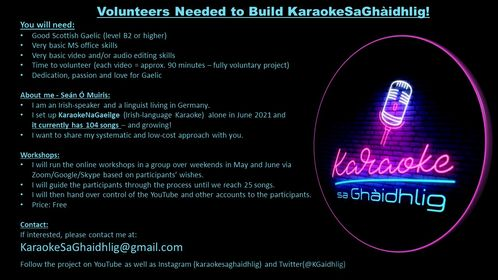
Seán makes the point strongly that his innovative approach is undertaken in a completely voluntary capacity, without any institutional backing, for the benefit of the Gaelic languages. You can hear him talking about it in detail in this interview in Irish for RTE. With over 100 karaoke versions of Irish songs on his YouTube channel he now wishes to start something similar for Scottish Gaelic and is offering to run free training seminars for anyone who might be interested in helping out.

His graphic below gives more detail:

karaokesaGhaidhlig


Tadhail air Island Voices – Guthan nan Eilean

Powered by WPeMatico

Invitation to Unmute

Le Gordon Wells

MOOTPicFinal

Who remembers we once mooted a MOOT?

Well, the idea of an Island Voices “Multilingual Open Online Teach-in” is now no longer, um, moot – for want of a better word. “Chan ann a h-uile latha a bhios mòd aig Mac an Tòisich”, mar a chanas iad, (“It’s not every day Mackintosh throws a party” – loosely) but its time has come.

“Talking Points” with Tormod

We’ve recently placed a whole series of “Talking Points with Norman Maclean” recordings on our YouTube channel, built on a merging of materials and ideas from the Soillse/UHI Language Sciences Institute projects Mediating Multilingualism and Saoghal Thormoid. In the last few weeks of the funded period for Mediating Multilingualism, linguists in universities in Scotland, India, and Jamaica discussed topics of common interest with UK-based community language speakers, stimulated by brief extracts from the final session of Saoghal Thormoid. And these discussions are now available to view.

It’s an experimental format, mixing subtitled Gaelic recordings with live English debate. The topics are sociolinguistic, covering Language Endangerment (Gaelic Trajectory?), Language Hierarchies (English Ascendancy?), and Language Contact (Bilingual Balance?). And they may raise just as many questions as answers, if not more. Just the thing then for the enquiring mind, and quite in the spirit of the “Teach-in” philosophy described in our 2019 post! In the end, we didn’t set up a separate online forum then, and we won’t now. There are perfectly good comment and reply functions on YouTube and here on WordPress for any questions readers or listeners may have.

YouTube Playlist

But to help provide a degree of focus or sense of direction – without closing down the options for diverging lines of thought and enquiry – we’ve put together a special “box set” International Island Voices MOOT playlist on YouTube that brings together the Talking Points material with some other key videos from our overall body of work which underpin and exemplify our multilingual approach.

Previews

By the way, we knitted some 2-minute Norman Maclean “highlights” into the recorded discussions, as an aide memoire for the longer extracts that were being discussed. If you want a quick taste of a topic, we’ve extracted them here, and you can take a quick look at any of them now, before choosing which full discussion to dive into for the wider treatment.

1. Gaelic Trajectory? 2. English Ascendancy?
3a. Bilingual Balance? 3b. Homecoming Postscript

Taking Part

There’s no start or stop date on this. The “Talking Points” participants are separated by up to ten and a half hours difference in time zones between India and Jamaica, so a simultaneous “launch” has not been feasible. And our geographical catchment is worldwide, so the approach is deliberately asynchronous – completely independent of any timetable. View the videos, ask questions, and make comments (which will be moderated) as and when you can and wish. Please be polite, and be prepared to be patient if waiting for responses.

Choosing where to comment is up to you. Specific queries about particular videos may be best posted under the relevant YouTube clip. But if your point or question is more general, then a comment here under this WordPress post may be the best place.

Binge-watching the whole playlist in one go is probably doable, if challenging, but perhaps not the best way of giving yourself time to think through issues that arise and about which you may have questions. A better approach might actually be to split up the longer discussion videos into smaller chunks – for which the “chapters” function in YouTube may well come in handy. If you take a look at the video description for any of these long clips you’ll find timed listings for each of the speakers, which you can click on to go straight to that particular point in the film.

And any time you catch yourself wondering which one’s Treebeard, it’s probably time for a break…

We’re pleased to have a receptive and supportive audience and readership, of course, but comments, questions and other feedback are always very welcome. Wikipedia tells us “Teach-ins are meant to be practical, participatory, and oriented toward action. While they include experts lecturing on their area of expertise, discussion and questions from the audience are welcome…”

Dear readers, whether you have questions or suggestions, the MOOT is open. We invite you to “unmute”!

International Island Voices MOOT: the YouTube Playlist


Tadhail air Island Voices – Guthan nan Eilean

Powered by WPeMatico