Le Gordon Wells
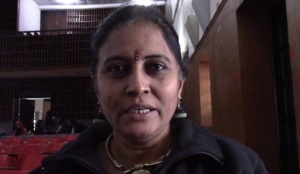
 In amongst the valuable Gaelic social history, Stòras Beò nan Gàidheal interviewer Pàdruig Moireach (Peter Murray) uncovered some interesting new family stories when he talked to his mother, Seònaid (Jessie) – including why she didn’t emigrate to Canada!
In the first part, Jessie, originally from Shawbost, Lewis, talks to Peter about their family history, and how his grandparents actually met and married around the time of the Depression in Detroit, where there was a strong Gaelic community. She tells stories of jumping ship, and working conditions and how they differed in America. On returning to Lewis they raised a family on the croft, and Jessie talks of her earliest memories of life on the land, herding the cows and getting home-made butter and cheese, and the food she got at school before they opened a canteen. (You can get a Clilstore transcript here: Unit 8388.)
In the second part, Jessie recalls her schooling and the weak Gaelic component to it, though the language was strong in the playground and the community. Communion practices are also recalled, as well as the role of supernatural tales, and New Year and Hallowe’en customs in a culture where house visits were common. After leaving school at 16 and some work experience, Jessie settled on training for nursing, which took her to Glasgow. Plans to move to Canada were abandoned when she met Peter’s father, and they returned to Lewis, first to Carloway, then Stornoway. Now living in Inverness, she offers thoughts on changes she’s seen in Lewis and the lack of opportunities. She prefers to remember home as it was. (You can get a Clilstore transcript here: Unit 8389.)
Tadhail air Island Voices – Guthan nan Eilean
Powered by WPeMatico


 This final article – a printed version of a text originally written to be read aloud as a presentation to a listening audience, a text therefore first written to be voiced and then later readjusted to be read (silently?) rather than listened to – also reminds us of the third challenge this special issue has highlighted. How can the written form of an article, editorial or book express the ‘what else’ or ‘what different-ness’ of reading aloud? How can words on paper or screen contain that which we are arguing voice adds, ear captures and body enacts? This challenge is made explicit by Wells, but we can also read each of the other pieces with an eye (or ear) for how this struggle plays out.”
 It’s April 2020 and the global lockdown continues, whether you’re on the West coast of Scotland or in West Bengal. We’re largely “confined to quarters” in the international bids to lessen the impact of the COVID-19 pandemic. The internet has many faults, but now offers the potential to afford mental release in times of physical restriction, at least to those fortunate to have access to it. Here’s an example.