
Le Gordon Wells
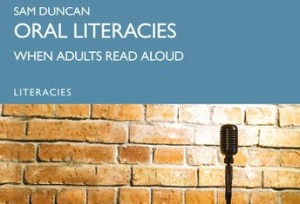 Following her major project on Reading Aloud, in which she included research on Gaelic as well as many other languages in England, Scotland, and Wales, Sam Duncan has now written a book about it. The title, “Oral literacies”, nicely encapsulates the challenge to many established orthodoxies around language and learning that Sam clearly, yet warmly articulates within its pages.
This is, in fact, the second substantial publication emerging from the project, following the special issue of Changing English last year which compiled a number of papers from the UCL symposium on the same topic. These included Gordon Wells’ paper on Island Voices, which focussed on the primacy of speech while freshly acknowledging the porosity of the boundary with written language.
While proponents of established language teaching regimes (and writers of census questions) may still find it appropriate to categorise linguistic behaviour in terms of a traditional “four skills” matrix, it’s refreshing to find research work which interrogates a rigid compartmentalisation of reading, writing, speaking and listening. Approaching, as she does, from a quite different perspective to that of Gaelic revitalisationism, it may nonetheless be significant for those engaged in the latter that “orality” features highly in Sam’s treatment.
And the book’s comprehensive index enables the selective reader to focus in on particular interests, such as Gaelic, psalm-singing, or indeed Island Voices!
Here’s the full back-cover description of the book.
This is the first book to focus exclusively on an examination of early 21st-century adult reading aloud. The dominant contemporary image of reading in much of the world is that of a silent, solitary activity. This book challenges this dominant discourse, acknowledging the diversity of reading practices that adults perform or experience in different communities, languages, contexts and phases of our lives, outlining potential educational implications and next steps for literacy teaching and research.
By documenting and analysing the diversity of oral reading practices that adults take part in (on- and offline), this book explores contemporary reading aloud as hugely varied, often invisible and yet quietly ubiquitous. Duncan discusses questions such as: What, where, how and why do adults read aloud, or listen to others reading? How do couples, families and groups use oral reading as a way of being together? When and why do adults read aloud at work? And why do some people read aloud in languages they may not speak or understand?
This book is key reading for advanced students, researchers and scholars of literacy practices and literacy education within education, applied linguistics and related areas.
There was an online launch at Lancaster University in early January, for which Sam wrote this blogpost:
The scholarship is meticulous throughout the book in its treatment of a fascinatingly wide-ranging and ambitious topic. Nonetheless, Sam’s writing style (of which the blogpost gives us an example) remains clear, approachable, and fundamentally humane – while pleasingly sprinkled with evocative surprises:
“… and in the background we might hear the sounds of Gaelic karaoke…”
The interested readership may well extend beyond the purely academic!
Tadhail air Island Voices – Guthan nan Eilean
Powered by WPeMatico
 Rövid dokumentumfilm a Ceòlas skót-gael zenei nyári iskoláról, melyet a Skócia Nyugat Szigeteihez, a Külső Hebrdákhoz tartozó Dél-Uiston rendeznek meg minden évben.
 Μια ταινία μικρού μήκους για το κέντρο ημέρας Craigard στο Lochmaddy, στα Δυτικά Νησιά της Σκωτίας. Πρόκειται για ένα μέρος, όπου πολλά άτομα περνούν δημιουργικά και ευχάριστα το χρόνο τους.
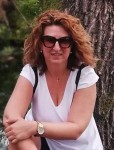 Valentini still works for the same group, offering support in public relations, and has been involved in various other European projects. She’s always enjoyed this work because of the opportunities it’s offered to meet people of other cultures, who speak other languages, and who have other ways of thinking.
 Twitter hashtags do not normally attract much attention from Island Voices, far less participation or amplification. Firestorms and pile-ons are not our normal digital habitat. Rather, our natural inclination is more towards common sense than confected indignation or online mass hysteria. But every now and then, one catches the eye –
  It’s this additionality that balanced bilingualism, or indeed multilingualism, confers that Island Voices has been promoting from the start. A project founded upon transnational European co-operation is never going to accept a characterisation of its linguistic roots as somehow blinkered or introspective, or that it is motivated by selfish concerns for “cosa nostra” alone. Island Voices would not even have started, with its roots going back to the POOLS project of 2005-2007, without the support of European funding and partners from many different language backgrounds. We hope our response has been, and continues to be, appropriately reciprocal too, for example through our
  Mary Robertson is another well-known Benbecula resident, here talking to fellow Baoghlach Archie Campbell for the
  St Kilda, UNESCO-Welterbestätte im Nordatlantik, ist für viele Schottlandbesucher ein Traumziel. Der Kurzfilm berichtet über eine Gruppe von Tagesausflüglern, die vom natürlichen und kulturellen Reichtum des abgelegenen Archipels in ihren Bann gezogen werden.
 Our translator and narrator for this film is Volker Labitzke. A keen traveller who has visited many places all over the globe, he found his paradise in the Outer Hebrides where he moved from Germany more than 10 years ago.
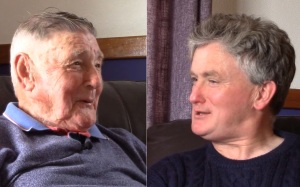 Moving on to Benbecula this month we feature Alec MacPhee from Nunton – Baile nan Cailleach – in our regular spotlight on contributors to